Methodology

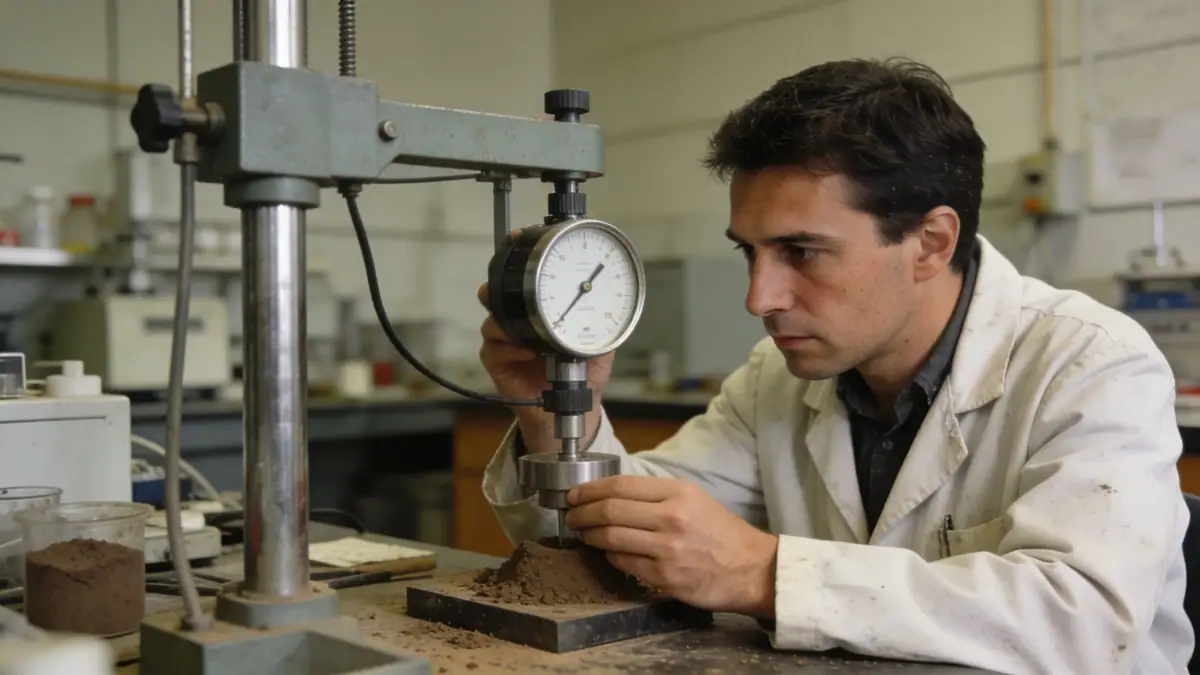
Our methodology for the standard penetration test in Calgary follows ASTM D1586, ensuring consistent and comparable results across all projects. We deploy experienced drill crews using automatic hammers to achieve an energy efficiency of 60% (N60), which is critical for accurate soil strength evaluation. Sampling intervals are typically every 1.5 m, with continuous sampling in critical zones. Our team integrates SPT data with laboratory testing to develop comprehensive geotechnical models. We also offer complementary methods like cone penetration test (cpt) for soft soils to provide a complete picture of subsurface conditions.
Reference Technical Parameters
| Parameter | Reference Value |
|---|---|
| Predominant soil type | Glacial till (sandy silt with gravel) |
| Maximum seismic acceleration (PGA) | 0.2g (NBCC 2020) |
| Typical groundwater level | >5 m below surface (except river valleys) |
| Bedrock depth | 10–30 m (shallower in northwest) |
| Typical N60 range | 10–50 blows/300 mm (till); 5–15 (soft zones) |
Local Considerations — Calgary
Calgary's geology is dominated by glacial till, with variable layers of sand, gravel, and clay overlying Cretaceous bedrock (Paskapoo Formation). Groundwater is typically deep, except near the Bow and Elbow Rivers where shallow water tables can affect excavations. Seismic hazard is moderate due to distant subduction zone events; the National Building Code of Canada assigns a PGA of 0.2g for Calgary. Soil conditions vary significantly between developed areas like downtown (deep till) and newer suburbs (shallow bedrock). Typical projects include high-rise foundations requiring SPT to 30 m depth and residential slab-on-grade assessments. For dynamic loading applications, dpsh dynamic probing is often utilized to complement SPT data.
Request a Quote
Our team reviews your project and issues an initial report at no cost.
Or write us directly at [email protected]
Services in Calgary
Locations covered in Calgary
Applicable Standards
- ASTM D1586
- National Building Code of Canada (NBCC) 2020
- Canadian Foundation Engineering Manual (CFEM)
- ISO 22476-3
Frequently Asked Questions
What soil types are commonly encountered in Calgary?
Calgary's subsurface is primarily glacial till, consisting of a dense mixture of sand, silt, and gravel with occasional clay lenses. Deeper deposits include the Paskapoo Formation sandstone and shale. This variability requires careful SPT sampling to characterize strength and compressibility for foundation design.
How does seismic hazard affect SPT requirements in Calgary?
Calgary is in a moderate seismic zone with a PGA of 0.2g per NBCC 2020. SPT data is essential for evaluating liquefaction potential in saturated sands and for determining soil amplification factors. Our SPT programs are designed to meet code requirements for site classification (Site Class D or E).
Are SPT investigations mandatory for residential construction in Calgary?
While not mandatory for all single-family homes, the City of Calgary requires geotechnical reports for developments on sloping terrain, infill lots, or where deep foundations are needed. Many municipalities also recommend SPT for basement construction to assess bearing capacity and groundwater conditions.