Methodology
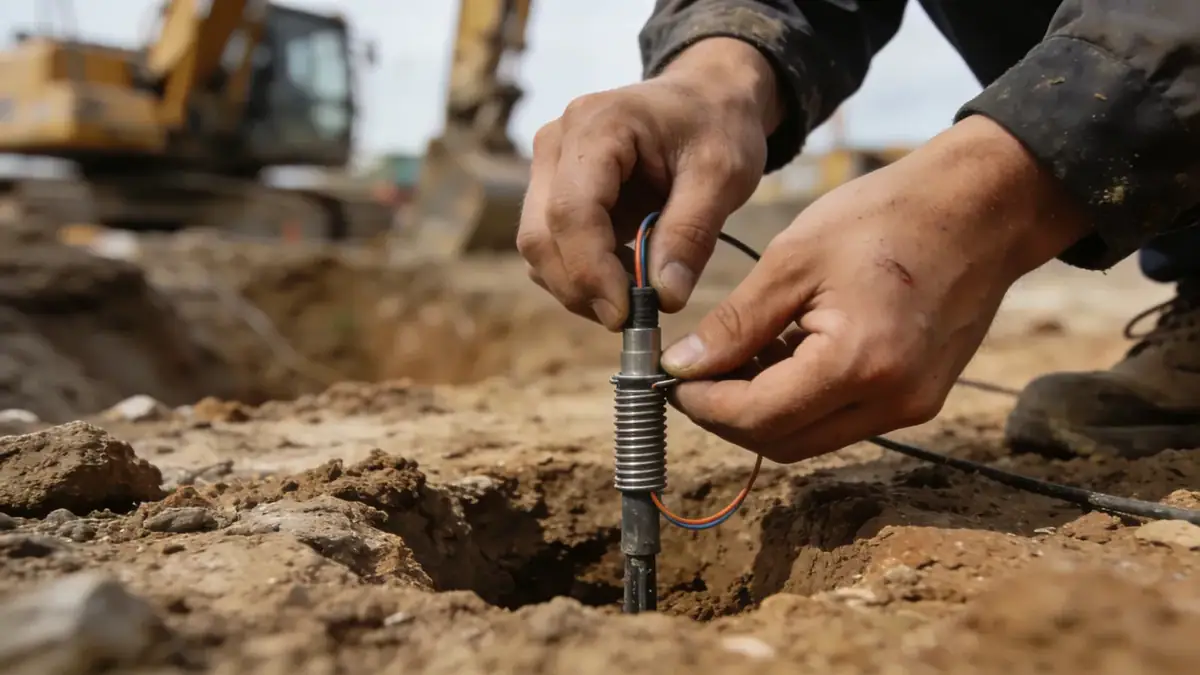
Our approach in Red Deer follows ASTM D1586 for standard penetration test (SPT), using automatic hammers and calibrated equipment to ensure consistent N-values. Borehole spacing and depth are optimized based on site geology—typically 10–20 m depth for residential projects and up to 30 m for industrial facilities. We integrate SPT with cone penetration test (cpt) where continuous stratigraphic profiling is required. Field procedures include groundwater monitoring, Shelby tube sampling for fine-grained soils, and real-time data transmission for quality control.
Reference Technical Parameters
| Parameter | Reference Value |
|---|---|
| Predominant soil type | Glacial till, clay, silt, sand and gravel |
| Maximum seismic acceleration (PGA) | 0.15–0.20 g (NBC 2020 Seismic Hazard) |
| Typical groundwater level | 3–8 m below ground surface |
| Bedrock depth | 10–30 m (sandstone, siltstone, shale) |
| Typical N60 range | 10–40 (glacial till); 5–15 (clay/silt) |
Local Considerations — Red Deer
Red Deer’s subsurface is dominated by glacial till overlying Cretaceous bedrock (Paskapoo Formation), with localized clay lenses and sand channels from glacial Lake Edmonton. Groundwater levels fluctuate seasonally, typically 3–8 m deep, but can be shallower near the Red Deer River valley. Seismic hazard is moderate (PGA 0.15–0.20 g per NBC 2020), requiring site-specific response analysis for essential buildings. Older neighborhoods (e.g., Lancaster, Vanier) may have uncontrolled fill or buried utilities, while new subdivisions (e.g., Timberlands) require deeper SPT to assess till strength. Our standard penetration test (spt) program accounts for these variations, ensuring reliable bearing capacity and settlement estimates. For dynamic compaction or deep foundations, we also offer dpsh dynamic probing to complement SPT data.
Request a Quote
Our team reviews your project and issues an initial report at no cost.
Or write us directly at [email protected]
Services in Red Deer
Applicable Standards
- ASTM D1586
- ASTM D2487
- ASTM D1587
- Alberta Building Code 2019 (based on NBC 2020)
- CSA S16 (steel design, seismic provisions)
Frequently Asked Questions
What are the typical soil conditions in Red Deer for foundation design?
Red Deer soils are predominantly glacial till (dense to very dense) overlying bedrock at 10–30 m depth. Clay and silt layers are common, with variable groundwater depths (3–8 m). SPT N60 values in till range from 10 to 40, providing good bearing capacity for shallow foundations, but deeper SPT may be needed in areas with soft clay or fill.
Does Red Deer require seismic site classification for new buildings?
Yes, under the Alberta Building Code (NBC 2020), seismic site classification (Site Class A–F) is mandatory for buildings in Red Deer. SPT N60 values are used to determine Site Class (typically C or D). Peak ground acceleration is 0.15–0.20 g, so site-specific analysis may be required for post-disaster or high-importance structures.
Is a standard penetration test mandatory for residential projects in Red Deer?
While not always mandatory for single-family homes, SPT is strongly recommended for multi-unit residential or projects on sloped terrain, near the Red Deer River valley, or with deep fill. The City of Red Deer may require geotechnical reports for subdivisions or commercial developments to ensure compliance with the Alberta Building Code.