Methodology
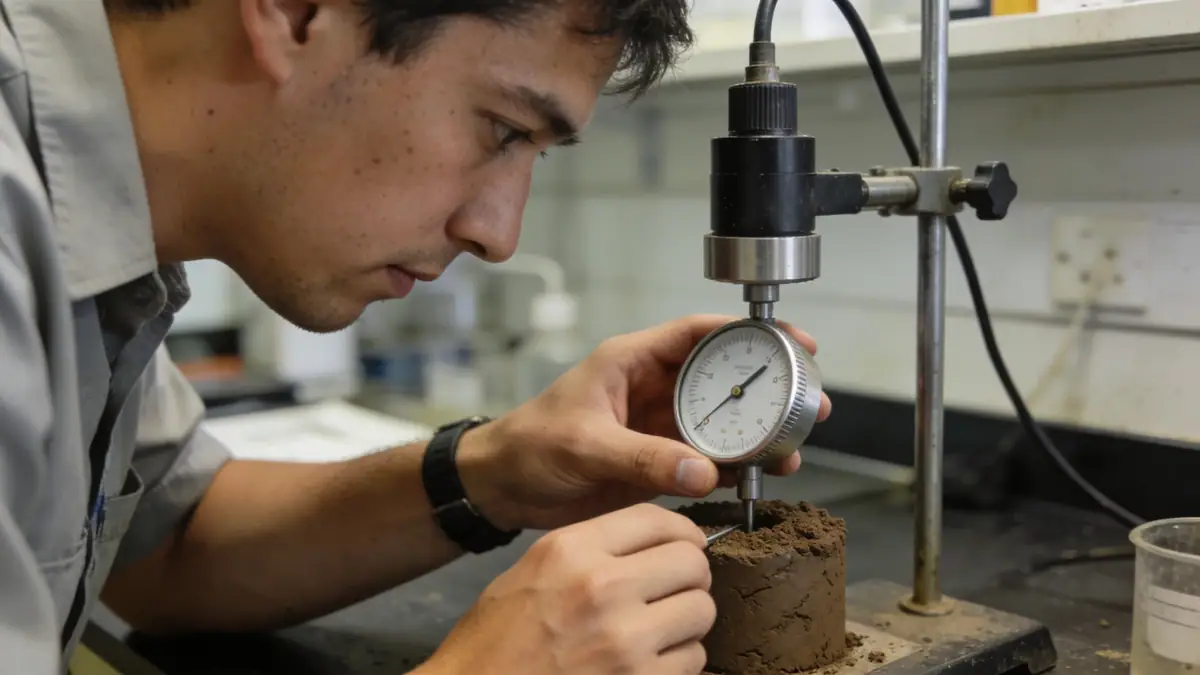
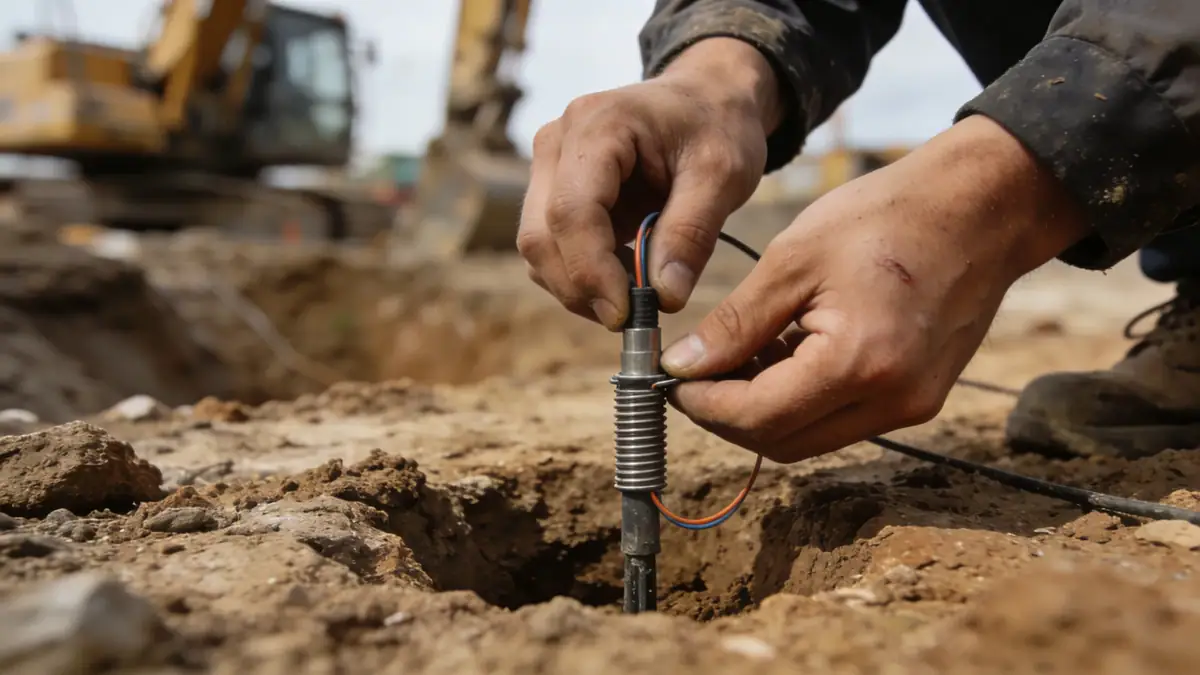
Our methodology for standard penetration test in Edmonton strictly follows ASTM D1586, with sampling intervals typically every 1.0 to 1.5 meters to capture stratigraphic variations. We employ automatic hammers and calibrated equipment to ensure consistent energy delivery, recording N-values that correlate with soil strength and liquefaction potential. The procedure includes continuous sampling in cohesive soils and split-barrel sampling in granular materials, with careful logging of recovery and soil classification. Data is integrated with local geological maps and historical borehole records to refine interpretations. For comprehensive site characterization, we often combine SPT with cone penetration test (cpt) to leverage continuous profiling. Our field team adheres to strict quality assurance protocols, including periodic hammer energy checks and calibration against reference standards.
Reference Technical Parameters
| Parameter | Reference Value |
|---|---|
| Predominant soil type | Glacial till (sandy silt with gravel), clay till, and lacustrine clay |
| Maximum seismic acceleration (PGA) | 0.15–0.30 g (for 2% in 50 years, per NBCC 2020) |
| Typical groundwater level | 3–10 m below ground surface, variable with season and river proximity |
| Bedrock depth | 20–50 m (Cretaceous bedrock, mostly shale and sandstone) |
| Typical N60 range | 10–40 blows/0.3 m (glacial till); 5–20 blows/0.3 m (lacustrine clay) |
Local Considerations — Edmonton
Edmonton's subsurface is dominated by glacial till, lacustrine clay, and preglacial deposits, with bedrock (Cretaceous shale) at depths between 20 and 50 meters. The North Saskatchewan River valley creates variable groundwater conditions, often requiring dewatering for deep excavations. Seismic hazard is low to moderate per NBCC 2020, but liquefaction potential exists in loose sands along the river. Downtown high-rises typically require deep foundations (piles or caissons) bearing on till or bedrock, while suburban projects use shallow foundations on stiff clay. Our team integrates these factors with dpsh dynamic probing for rapid profiling of granular layers, ensuring cost-effective designs. Typical challenges include expansive clays and frost heave, which influence foundation depth and moisture control.
Request a Quote
Our team reviews your project and issues an initial report at no cost.
Or write us directly at [email protected]
Services in Edmonton
Locations covered in Edmonton
Applicable Standards
- ASTM D1586
- NBCC 2020 (National Building Code of Canada)
- Alberta Building Code 2023
- Canadian Foundation Engineering Manual (CFEM)
- ASTM D2487 (Unified Soil Classification System)
Frequently Asked Questions
What soil conditions are typical in Edmonton for SPT investigations?
Edmonton's soils are predominantly glacial till (sandy silt with gravel) and lacustrine clay, with N60 values typically ranging from 10 to 40 blows/0.3m in till and 5 to 20 in clay. These conditions require careful SPT execution to avoid overestimating strength in gravelly layers.
Is a standard penetration test required for residential construction in Edmonton?
For single-family homes on stable till, SPT may not be mandatory, but it is strongly recommended for any site with variable fill, river proximity, or planned basements. The Alberta Building Code requires geotechnical investigations for structures with irregular loads or high seismic risk.
How does Edmonton's seismic hazard affect SPT testing?
Edmonton lies in a low seismic zone (PGA 0.15–0.30g), but SPT N-values are crucial for evaluating liquefaction potential in saturated sands, particularly near the North Saskatchewan River. Our testing follows NBCC 2020 procedures to assess cyclic resistance.