Methodology
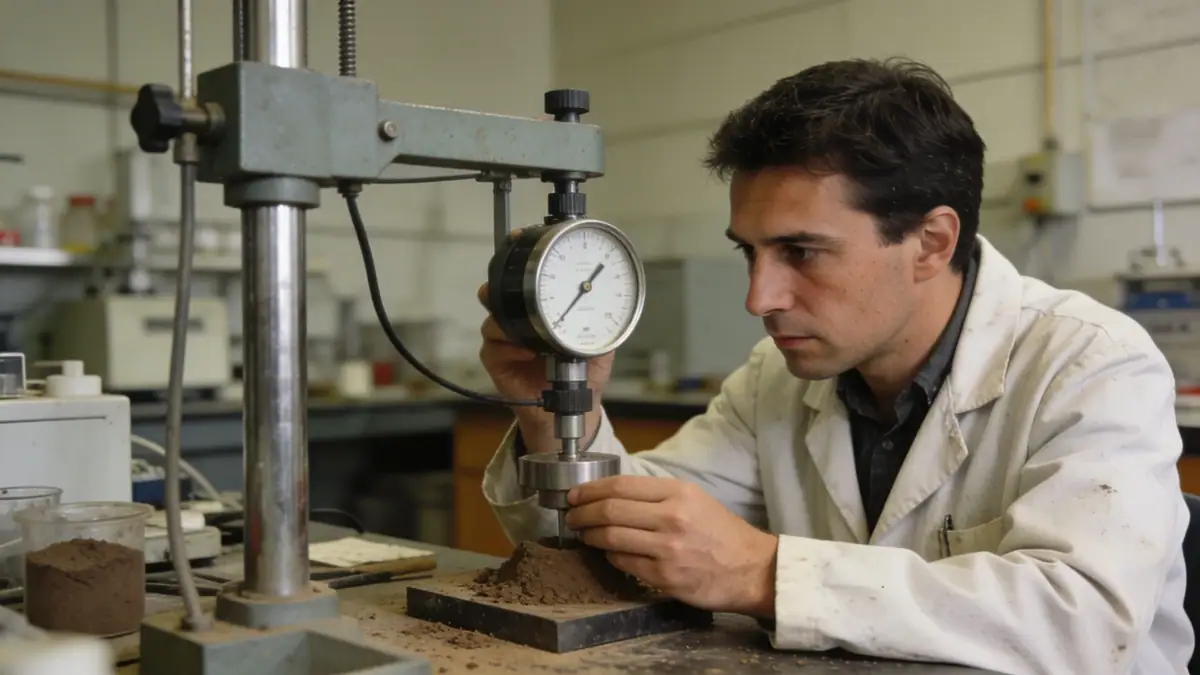
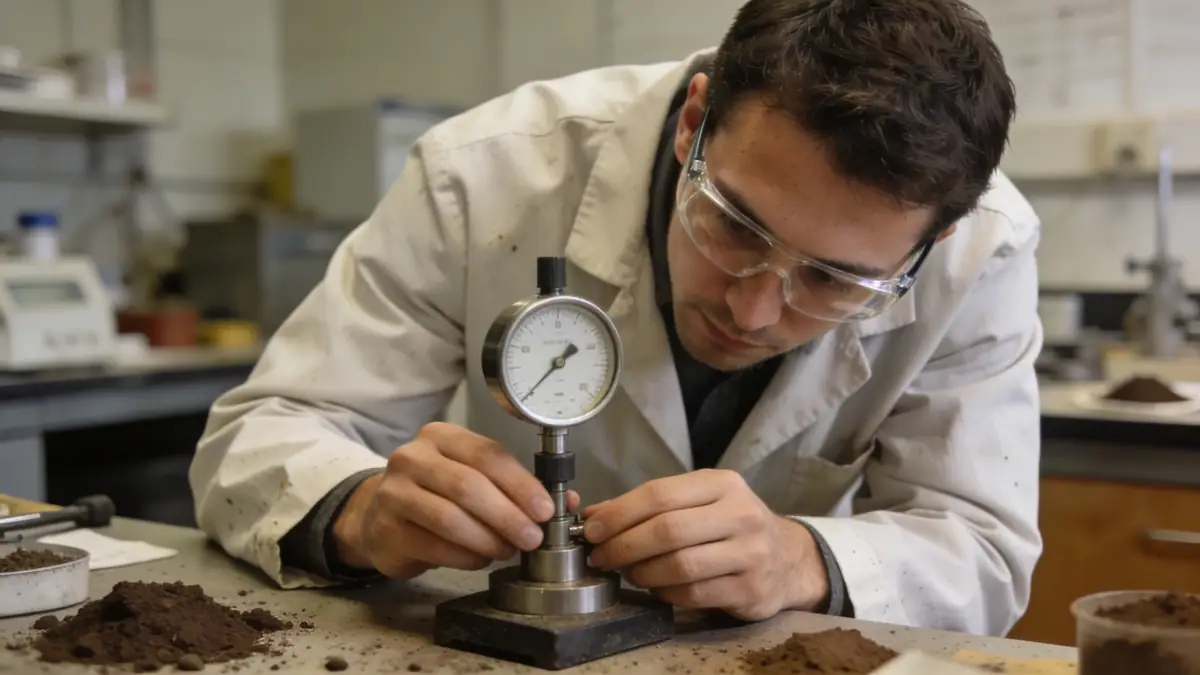
Our CPT methodology follows ASTM D5778-20 and Canadian Foundation Engineering Manual guidelines. We use 20-tonne cone penetrometers with a 60° apex angle, 10 cm² base area, and 150 cm² friction sleeve. The cone is advanced hydraulically at 20 mm/s, with measurements of cone tip resistance (qc), sleeve friction (fs), and pore pressure (u2) recorded at 2 cm intervals. Data is processed to derive soil behavior type (SBT) charts and geotechnical parameters such as undrained shear strength (su) and overconsolidation ratio (OCR). For shallow depths or sensitive sites, we also deploy DPL Light Dynamic Probing as a complementary tool. Our field procedures ensure compliance with ISO 22476-1 and local provincial regulations.
Reference Technical Parameters
| Parameter | Reference Value |
|---|---|
| Cone Tip Resistance (qc) | 0.5 – 50 MPa |
| Sleeve Friction (fs) | 10 – 500 kPa |
| Pore Pressure (u2) | 0 – 3 MPa |
| Penetration Depth | Up to 50 m (soft soils) |
| Data Sampling Interval | 2 cm |
Local Considerations — Canada
Canada's diverse geology requires adaptable CPT protocols. In the Fraser Valley (e.g., Abbotsford), thick deltaic silts and high groundwater demand pore pressure dissipation tests. In the Prairie regions (e.g., Airdrie), glacial tills with cobbles may require pre-drilling or alternative methods. For urban infill projects in Ajax or Barrie, shallow fill layers and variable compaction necessitate careful cone selection. Our firm customizes CPT programs for each region, using weighted cones in gravelly soils and seismic CPT (SCPT) for liquefaction assessment in seismic zones. We maintain a national fleet of CPT trucks and track-mounted units to access sites in Belleville, Brampton, and beyond, ensuring consistent data quality across all provinces.
Request a Quote
Our team reviews your project and issues an initial report at no cost.
Or write us directly at [email protected]
Applicable Standards
- ASTM D5778-20 (Standard Test Method for Electronic Friction Cone and Piezocone Penetration Testing of Soils)
- ISO 22476-1:2012 (Geotechnical investigation and testing — Field testing — Part 1: Electrical cone and piezocone penetration test)
- Canadian Foundation Engineering Manual (4th Edition, 2006) – Chapter 6: In-Situ Testing
- National Building Code of Canada 2020 – Division B, Part 4: Foundations
Frequently Asked Questions
What is the typical depth range for Cone Penetration Testing (CPT) in Canada?
CPT can typically penetrate to depths of 30 to 50 meters in soft cohesive soils, but in dense sands or gravelly tills common in Canadian prairies, depth may be limited to 15–20 meters. Our rigs are equipped with 20-tonne thrust capacity, and we use pre-drilling or heavy-duty cones for challenging conditions.
How does CPT data correlate with Standard Penetration Test (SPT) N-values?
Correlations between CPT cone resistance (qc) and SPT N-values are empirical and soil-specific. For sands, Robertson and Campanella (1983) suggest qc/N ≈ 0.4–0.6 MPa/blow. In clays, su derived from CPT is often compared to undrained shear strength from SPT. Our reports provide site-specific correlations validated by adjacent borings.
Can CPT be performed in winter conditions across Canada?
Yes, our CPT units are winterized for operations down to -30°C. We use heated hydraulic systems and insulated data acquisition cabins. Frozen ground may require pre-thawing or mechanical excavation to expose the surface. Our team coordinates with local authorities to maintain safety on icy sites in cities like Edmonton and Winnipeg.
How much does Cone Penetration Test (CPT) cost in Canada?
The cost of CPT in Canada ranges from $4,290 to $7,150 per test, depending on depth, site accessibility, and number of tests per project. This includes mobilization, data processing, and a summary report. For a precise quote, please contact our office with project details. Prices are based on 2026 market rates and may vary by location.