Methodology

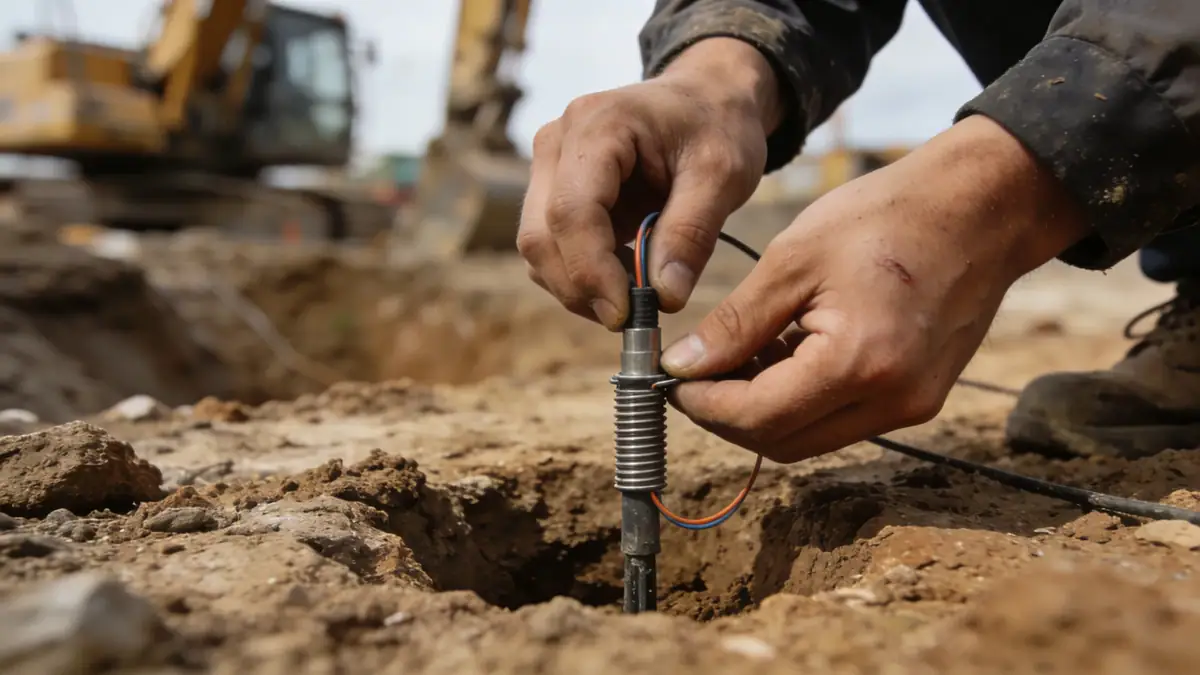
Our methodology for standard penetration test (spt) in Ottawa follows ASTM D1586, with rigorous field procedures and quality control. A 63.5 kg hammer drops 760 mm to drive a split-spoon sampler, recording blow counts (N-value) each 150 mm. We correct for overburden pressure and energy efficiency to obtain N60 values. In Leda clay, we supplement with in-situ vane shear tests. Our team deploys track-mounted rigs for difficult access sites and provides real-time data logging. All equipment is calibrated per ASTM standards, ensuring repeatability and accuracy across Ottawa's diverse soil profiles.
Reference Technical Parameters
| Parameter | Reference Value |
|---|---|
| Predominant soil type | Glacial till, Leda clay, alluvial sands |
| Maximum seismic acceleration (PGA) | 0.2 g (NBCC 2020, Site Class D) |
| Typical groundwater level | 1.5–4.0 m below grade |
| Bedrock depth | 10–30 m (Paleozoic limestone) |
| Typical N60 range | 5–15 (Leda clay), 20–50 (till) |
Local Considerations — Ottawa
Ottawa's Leda clay is highly sensitive and prone to strain softening, requiring careful SPT blow count interpretation. The city's seismic hazard (PGA 0.2 g) mandates liquefaction assessment per NBCC 2020. Groundwater is shallow (1.5–4 m), affecting drilling methods. Eastern Ottawa (Orléans) features thicker Leda clay, while western areas (Kanata) have more glacial till. Typical projects include mid-rise foundations and infrastructure where cone penetration test (cpt) complements SPT. Our team adapts sampling intervals to avoid smear in clay and accounts for cobbles in till. Local fill and organic deposits require careful logging.
Request a Quote
Our team reviews your project and issues an initial report at no cost.
Or write us directly at [email protected]
Services in Ottawa
Locations covered in Ottawa
Applicable Standards
- ASTM D1586
- NBCC 2020 (National Building Code of Canada)
- Ontario Building Code (OBC) 2012
- CSA A23.3 (concrete design)
Frequently Asked Questions
What soil types are most common in Ottawa for SPT testing?
Ottawa's soils are dominated by Leda clay (sensitive marine clay), glacial till, and alluvial sands along the Ottawa River. Leda clay exhibits N-values typically between 5 and 15, while till ranges from 20 to 50. Proper SPT procedures are critical in clay to avoid disturbance.
Is SPT required for seismic design in Ottawa?
Yes, per NBCC 2020, Ottawa is in a seismic zone with PGA of 0.2 g. SPT provides N60 values for liquefaction assessment and site classification (Site Class D or E). Geotechnical reports must include SPT data to justify foundation design for buildings and infrastructure.
Are geotechnical studies mandatory for construction in Ottawa?
The Ontario Building Code requires geotechnical investigations for most buildings, especially those on Leda clay or in seismic zones. SPT is a standard method for soil strength and settlement analysis. Local municipalities may also require studies for subdivisions or near sensitive areas.