Methodology

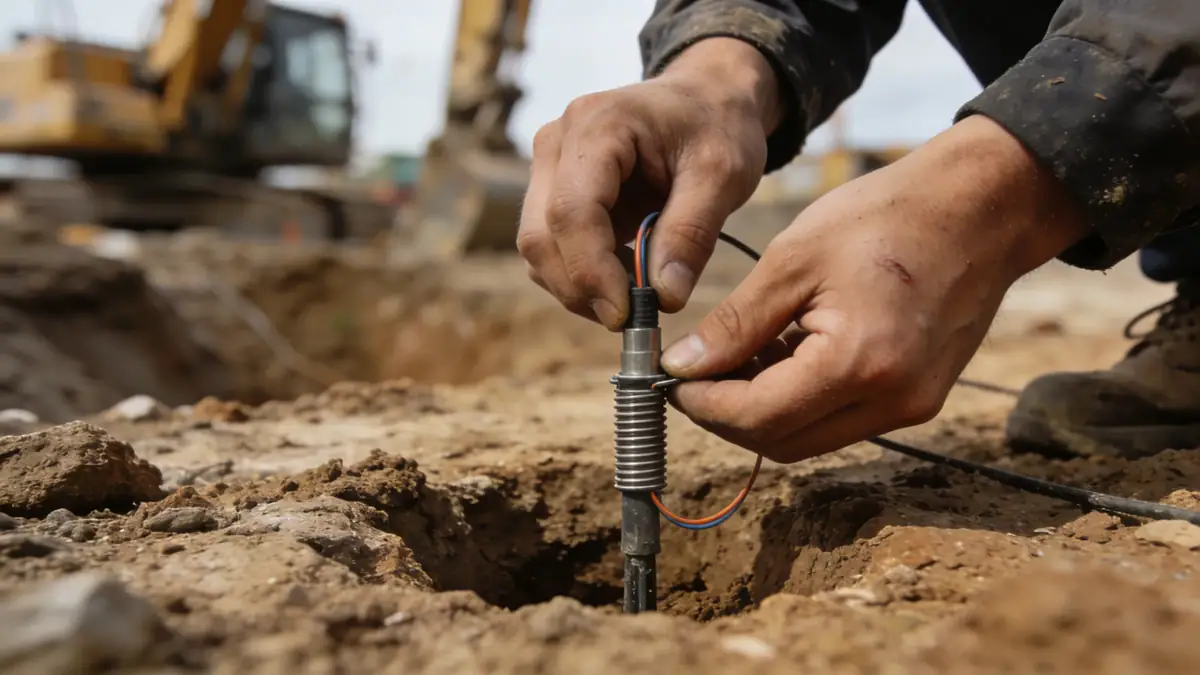
Our methodology for standard penetration test in Kingston Ontario follows ASTM D1586, with a safety hammer and standard split-spoon sampler. Boreholes are advanced using hollow-stem augers to minimize disturbance in cohesionless soils. We record blow counts per 150 mm interval, with N-values corrected for overburden and energy efficiency (N60). Sampling frequency is typically every 1.5 m, with continuous sampling in critical zones. Field logs include soil classification, groundwater observations, and refusal on bedrock. Our team integrates SPT results with laboratory testing for comprehensive geotechnical characterization. For additional subsurface data, we also offer cone penetration test (cpt) for continuous profiling in soft soils.
Reference Technical Parameters
| Parameter | Reference Value |
|---|---|
| Predominant soil type | Glacial till (silty sand with gravel), lacustrine clay in lowlands |
| Typical N60 range | 10-30 blows/300 mm in till; 5-15 in clay; >50 in dense sand/refusal on bedrock |
| Maximum seismic acceleration (PGA) | 0.15g to 0.25g (National Building Code of Canada 2015, seismic hazard map) |
| Typical groundwater level | 2-5 m below grade, perched in till; artesian in fractured limestone locally |
| Bedrock depth | 5-15 m in central Kingston; >20 m in outlying areas with deep overburden |
Local Considerations — Kingston Ontario
Kingston Ontario's subsurface is dominated by glacial till over Paleozoic limestone, with localized lacustrine clays near Lake Ontario. Seismic hazard (PGA up to 0.25g per NBCC 2015) requires site-specific response analysis, particularly for tall structures. Groundwater is often perched in till or confined in limestone fractures, necessitating careful monitoring during excavation. In older neighborhoods like Sydenham Ward, fill and former industrial waste complicate SPT interpretation. Typical projects include mid-rise buildings in the downtown core and residential subdivisions in the west end. For broader expertise, our standard penetration test (spt) services are complemented by regional experience from our standard penetration test en Ottawa hub.
Request a Quote
Our team reviews your project and issues an initial report at no cost.
Or write us directly at [email protected]
Services in Kingston Ontario
Applicable Standards
- ASTM D1586
- National Building Code of Canada 2015
- Ontario Building Code (OBC)
- CSA A23.3 (concrete design)
Frequently Asked Questions
What soil conditions are common in Kingston Ontario for SPT?
Kingston Ontario typically has glacial till (silty sand and gravel) overlying limestone bedrock. Lacustrine clay deposits occur near Lake Ontario. SPT N60 values range from 10 to 30 in till, with lower values in clay and refusal on bedrock. Groundwater is often encountered at 2-5 m depth.
Is seismic site classification required for projects in Kingston Ontario?
Yes, the National Building Code of Canada 2015 requires seismic site classification based on SPT N60 values. Kingston falls in a moderate seismic zone with PGA up to 0.25g. Site class (A to F) is determined from average N60 in the top 30 m, affecting design spectra.
Are SPT investigations mandatory for residential construction in Kingston Ontario?
While not mandatory for all single-family homes, the Ontario Building Code recommends geotechnical investigations for sites with variable soils or shallow bedrock. Many municipalities now require SPT boreholes for permit approval, especially for houses with basements or on sloped lots.