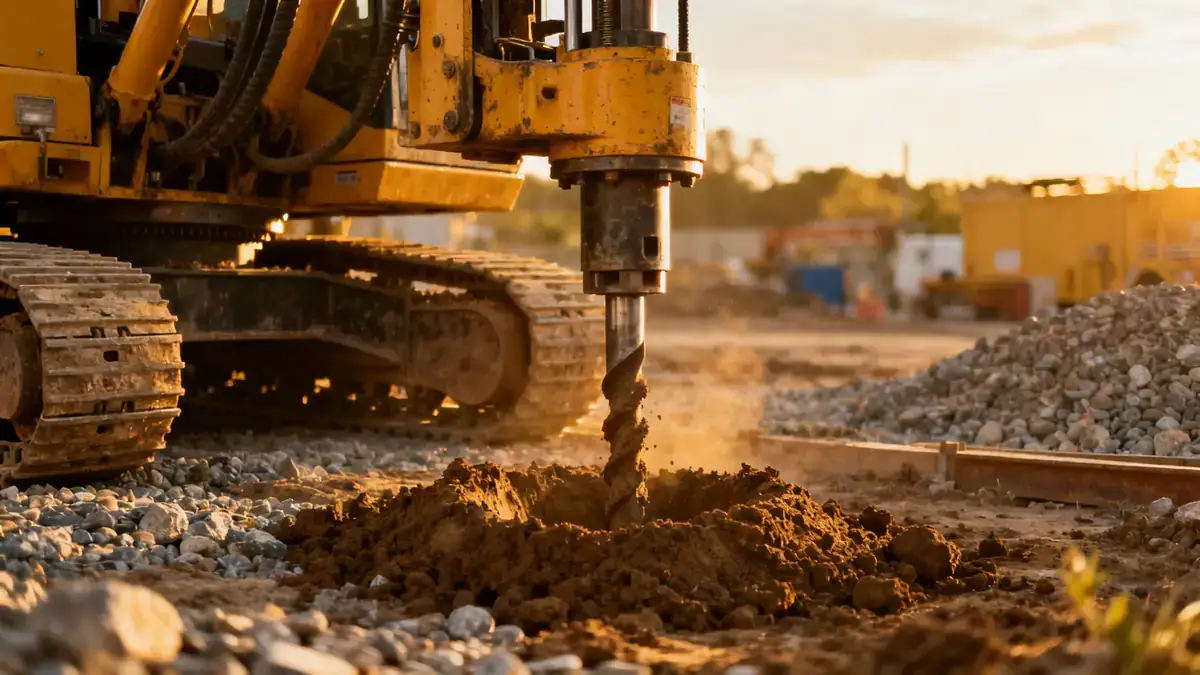
Methodology
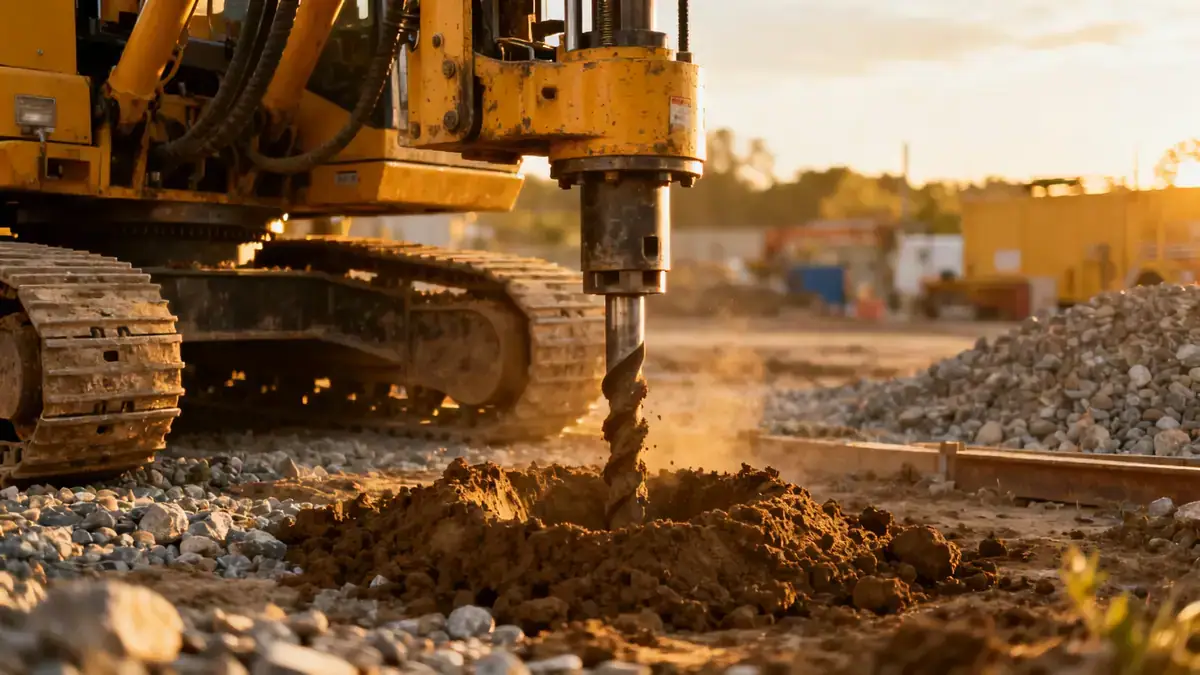
Our SPT methodology follows ASTM D1586 and Canadian Foundation Engineering Manual guidelines. A 63.5 kg hammer is dropped 0.76 m to drive a split-spoon sampler into the borehole. The blow count (N-value) is recorded over three 150 mm intervals, with the sum of the last two intervals reported. Sampling occurs at 1.5 m intervals or at stratigraphic changes. Energy measurements are taken to correct hammer efficiency. We routinely perform SPT to depths exceeding 50 m in dense tills. The test is complemented by continuous sampling and in-situ moisture content determination. For soft clays, we employ the CPT as described on our Cone Penetration Test (CPT) service page.
Reference Technical Parameters
| Parameter | Reference Value |
|---|---|
| Hammer Weight | 63.5 kg |
| Drop Height | 0.76 m |
| Sampler Dimensions | 35 mm ID, 50.8 mm OD |
| Typical N-value Range | 0–100 blows/0.3 m |
| Maximum Depth | >50 m (dependent on soil) |
Local Considerations — Canada
Canada’s diverse geology—from Fraser River delta silts near Abbotsford to glacial tills in Airdrie and marine clays in Ajax—demands adaptable SPT procedures. In seismic zones like Vancouver and Montreal, N-values are critical for liquefaction assessment per NBCC. Our team calibrates hammer energy and correction factors for regional soil types. For example, in Brampton’s clay till, we use 140 mm liners to reduce friction. In Barrie’s sensitive clays, we conduct SPT with continuous sampling to preserve structure. This regional expertise ensures reliable data for foundations, embankments, and seismic design. For detailed local insights, visit our Abbotsford SPT services page.
Request a Quote
Our team reviews your project and issues an initial report at no cost.
Or write us directly at [email protected]
Applicable Standards
- ASTM D1586-18 Standard Test Method for Standard Penetration Test (SPT)
- Canadian Foundation Engineering Manual (CFEM) 5th Edition
- National Building Code of Canada (NBCC) 2020 – seismic provisions
- ISO 22476-3:2005 Geotechnical investigation and testing – Field testing – Part 3: Standard penetration test
Frequently Asked Questions
What is the Standard Penetration Test (SPT) and how is it performed?
The SPT is an in-situ dynamic penetration test that measures soil resistance. A 63.5 kg hammer is dropped 0.76 m to drive a split-spoon sampler. The blow count (N-value) is recorded for each 150 mm interval, with the total for the last two intervals reported. Testing follows ASTM D1586.
What standards govern SPT execution in Canada?
The primary standard is ASTM D1586. Additionally, the Canadian Foundation Engineering Manual provides guidance on interpretation. For seismic applications, NBCC 2020 specifies N-value corrections for site classification. ISO 22476-3 may be referenced for international projects.
How long does a typical SPT program take?
A single SPT borehole to 30 m depth with sampling every 1.5 m typically takes 4–6 hours, depending on soil conditions. Mobilization and site access can add time. Our team coordinates logistics to minimize delays. For large projects, multiple rigs can be deployed.
How much does Standard Penetration Test (SPT) cost in Canada?
Costs vary based on depth, number of tests, and site accessibility. A typical range for standard SPT in Canada is $740 – $1,030 per borehole, including mobilization and basic reporting. Complex conditions or remote sites may increase costs. Contact us for a project-specific quote.