Methodology
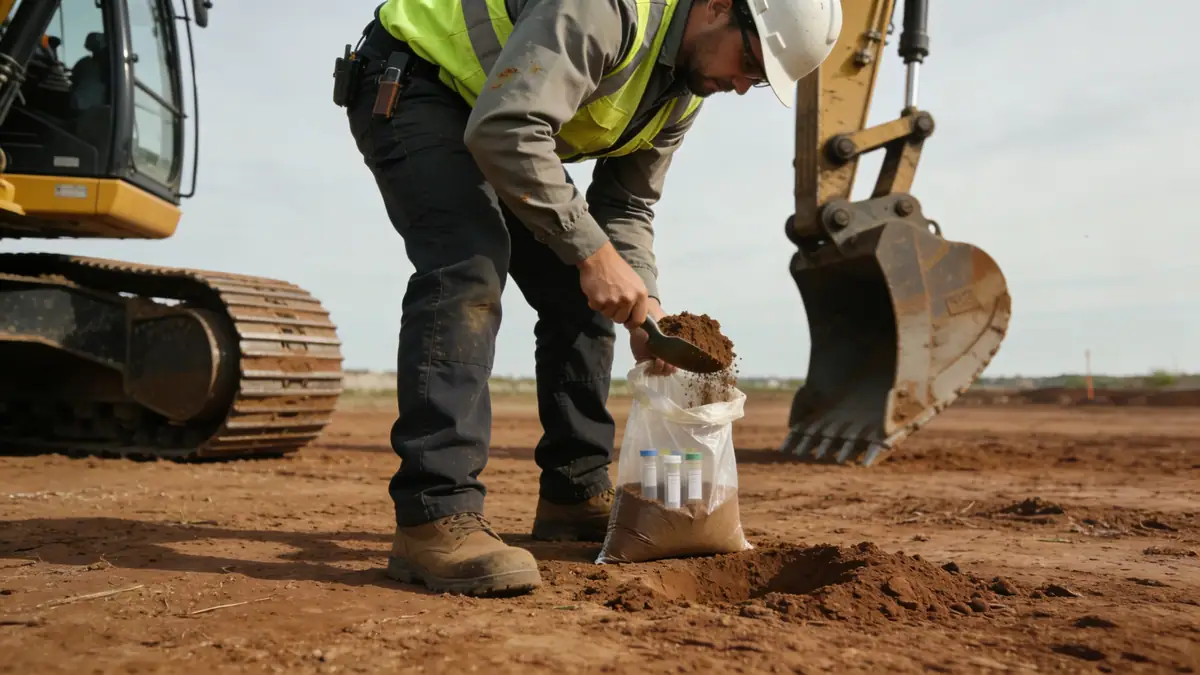
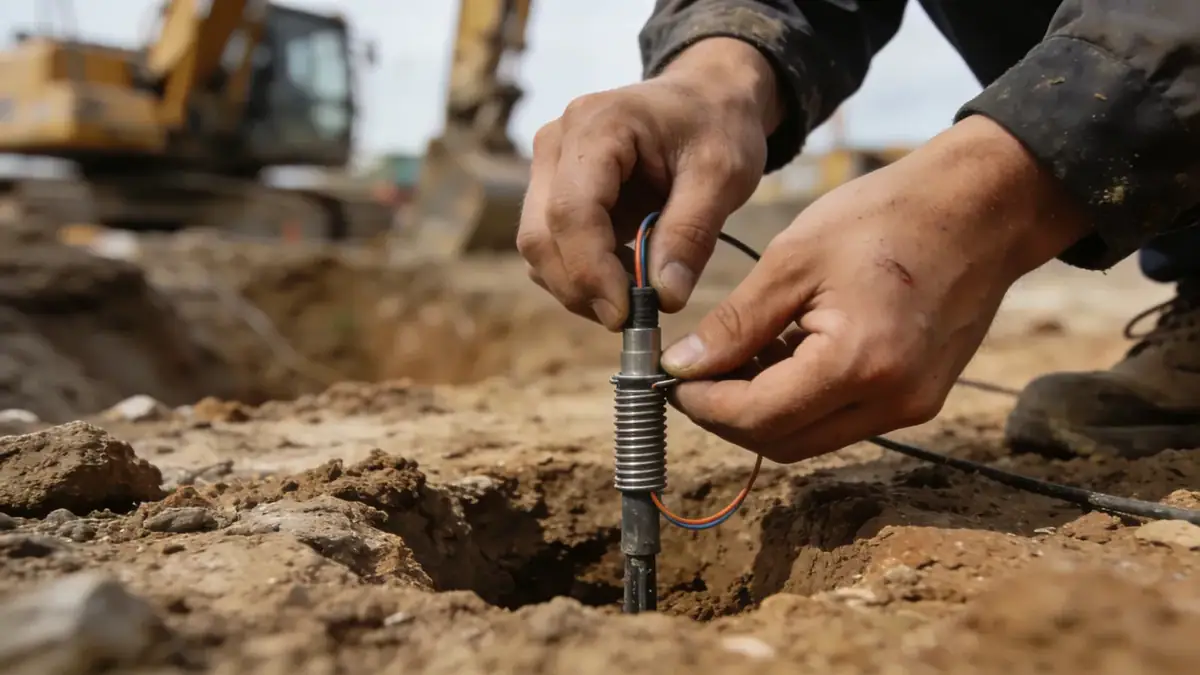
Our methodology for standard penetration test (SPT) in Abbotsford follows ASTM D1586, employing a 63.5 kg hammer dropped 760 mm to drive a split-spoon sampler. Boreholes are advanced using hollow-stem augers or mud rotary methods, with SPT conducted at 1.5 m intervals or at depth changes. Soil samples are classified per the Unified Soil Classification System (USCS), and N-values are corrected for overburden pressure (N60). We integrate SPT results with cone penetration test (CPT) soundings where needed to refine stratigraphic profiles. All fieldwork adheres to BCBC 2018 seismic site classification requirements, with data used to determine soil type (A–F) and design acceleration parameters.
Reference Technical Parameters
| Parameter | Reference Value |
|---|---|
| Predominant soil type | Glacial till, alluvial silts and sands, outwash gravels |
| Maximum seismic acceleration (PGA) | 0.20–0.35 g (NBCC 2020, Abbotsford area) |
| Typical groundwater level | 1.5–5.0 m below ground surface (variable with season and location) |
| Bedrock depth | 10–50 m (deeper in valley fill, shallower on uplands) |
| Typical N60 range | 5–30 blows/300 mm (soft to dense granular soils; stiff to hard cohesive soils) |
Local Considerations — Abbotsford
Abbotsford's geotechnical landscape is shaped by its location within the Fraser Lowland, with Holocene alluvial deposits from the Fraser and Sumas rivers overlaying Pleistocene glacial tills. The Sumas Prairie area exhibits thick sequences of soft organic silts and clays, often requiring deep foundations or ground improvement. In contrast, the eastern uplands feature dense glacial till with shallow bedrock, suitable for shallow foundations. Seismic site classification per NBCC 2020 ranges from Class C (very dense soil) to Class E (soft soil) in valley bottoms. Liquefaction potential exists in saturated sandy zones, particularly near the Fraser River. For regional context, our team coordinates with standard penetration test in Vancouver to align methodologies across the Lower Mainland.
Request a Quote
Our team reviews your project and issues an initial report at no cost.
Or write us directly at [email protected]
Services in Abbotsford
Applicable Standards
- ASTM D1586
- BCBC 2018 (British Columbia Building Code)
- NBCC 2020 (National Building Code of Canada)
- CSA A23.3 (Concrete Design)
- BC Ministry of Transportation Geotechnical Standards
Frequently Asked Questions
What are the typical soil conditions encountered in Abbotsford for SPT investigations?
Abbotsford soils vary from soft alluvial silts and clays in the Sumas Prairie area to dense glacial tills and outwash sands/gravels in upland areas. SPT N60 values typically range from 5 to 30, with lower values in valley fills and higher values in till. Groundwater is often encountered at 1.5–5 m depth.
Which seismic design parameters apply to standard penetration test projects in Abbotsford?
Per NBCC 2020, Abbotsford is in a moderate-to-high seismic zone with PGA of 0.20–0.35 g. SPT data is used to determine site class (A–F) and corresponding acceleration spectra. The BCBC 2018 mandates site-specific seismic hazard assessment for structures on soft soils (Class E/F).
Is a standard penetration test mandatory for building permits in Abbotsford?
Yes, for most commercial, multi-family, and infrastructure projects. The BCBC 2018 requires geotechnical investigations for any building on soft soil, in seismic areas, or with deep foundations. Single-family homes on proven competent till may be exempt, but SPT is often recommended for liability mitigation.