Methodology
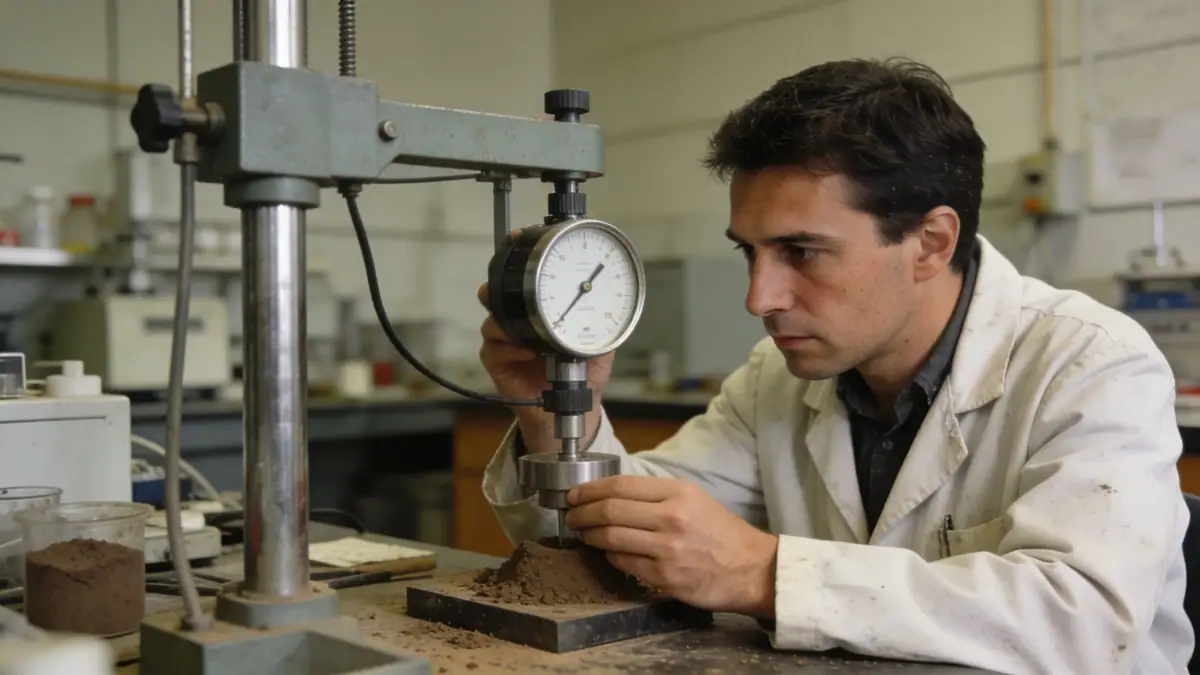
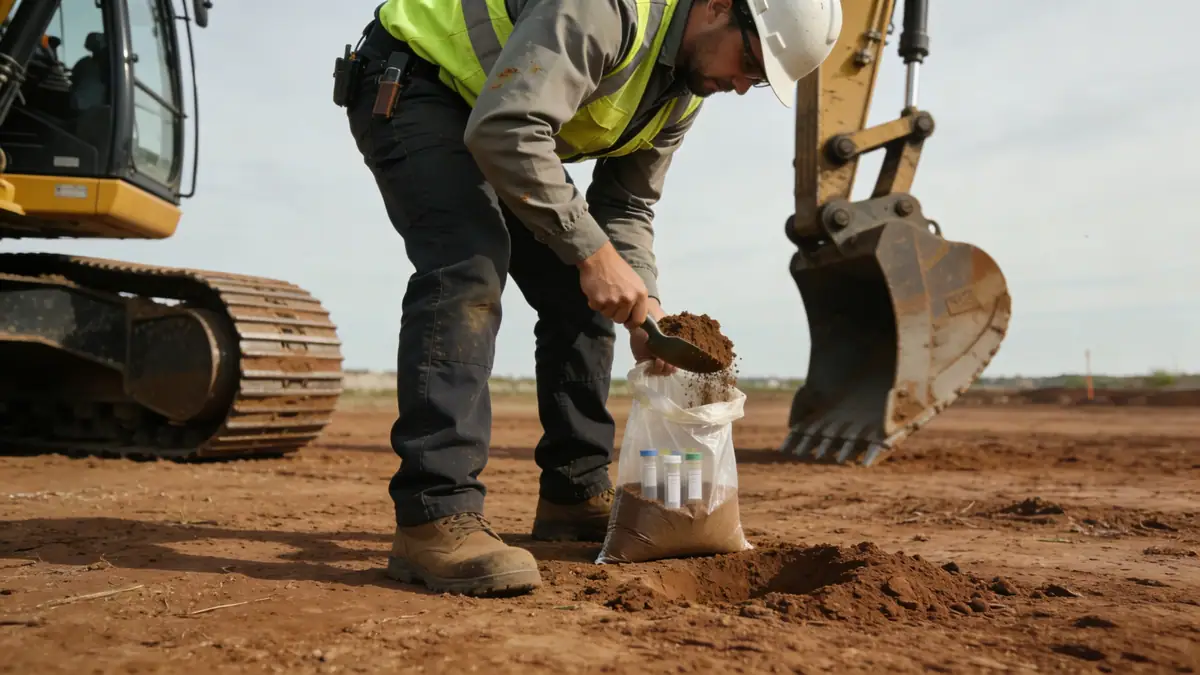
Our field methodology follows ASTM D1586 for standard penetration testing, with split-barrel sampling at 1.5 m intervals to refusal or target depth. We deploy truck-mounted drill rigs with hollow-stem augers to advance boreholes efficiently in Airdrie's glacial till and clay strata. Samples are logged on-site by our geologists and transported to our accredited laboratory for classification and strength testing. This approach ensures reliable N-values for foundation design, as detailed on our standard penetration test (spt) page.
Reference Technical Parameters
| Parameter | Reference Value |
|---|---|
| Predominant soil type | Glacial till (sandy silt to clayey silt) with cobbles and boulders |
| Typical N60 range (SPT) | 10–50 blows/ft (variable with gravel content) |
| Groundwater depth | 3–10 m below grade (seasonal variation) |
| Bedrock depth | 10–30 m (bedrock: Paskapoo Formation sandstone and siltstone) |
| Seismic site class (per NBCC 2020) | Class C or D (depending on soil stiffness and depth) |
Local Considerations — Airdrie
Airdrie's surficial geology consists of glacial till overlying bedrock of the Paskapoo Formation, with localized lacustrine deposits near Nose Creek. The water table fluctuates seasonally, typically encountered at 3–10 m depth. Seismic hazard is low to moderate (PGA ~0.10g per NBCC 2020), but site amplification must be assessed for soft soils. Older neighborhoods (e.g., Downtown, Windsong) may have undocumented fill; newer developments (e.g., South Point, Bayside) require deeper borings due to thicker till. Common challenges include cobbles/boulders causing SPT refusal and high-plasticity clays requiring careful foundation design. Our cone penetration test (cpt) complements SPT for continuous profiling in softer zones.
Request a Quote
Our team reviews your project and issues an initial report at no cost.
Or write us directly at [email protected]
Services in Airdrie
Applicable Standards
- ASTM D1586 – Standard Test Method for Standard Penetration Test (SPT)
- National Building Code of Canada (NBCC) 2020 – Seismic provisions
- Alberta Building Code 2019 – Foundation design requirements
- ASTM D2487 – Classification of Soils for Engineering Purposes (USCS)
Frequently Asked Questions
What soil conditions are typical in Airdrie for SPT investigations?
Airdrie's subsurface primarily consists of glacial till (sandy silt to clayey silt) with cobbles and boulders, underlain by Paskapoo Formation bedrock. Lacustrine deposits occur locally near Nose Creek. SPT N-values typically range from 10 to 50 blows/ft, with higher values in gravel-rich till.
Does Airdrie require seismic site classification for building permits?
Yes, the Alberta Building Code 2019 adopts NBCC 2020 seismic provisions. Airdrie falls under low-to-moderate seismic hazard (PGA ~0.10g). Site classification (Class A–F) via SPT or shear wave velocity is mandatory for buildings of Importance Category II or higher to determine amplification factors.
Are geotechnical investigations mandatory for residential construction in Airdrie?
The City of Airdrie does not explicitly require geotechnical reports for single-family homes, but they are strongly recommended for sites with known challenging soils (e.g., high-plasticity clays, fill). For commercial or multi-family projects, a geotechnical investigation is typically required during the development permit process.