
Methodology
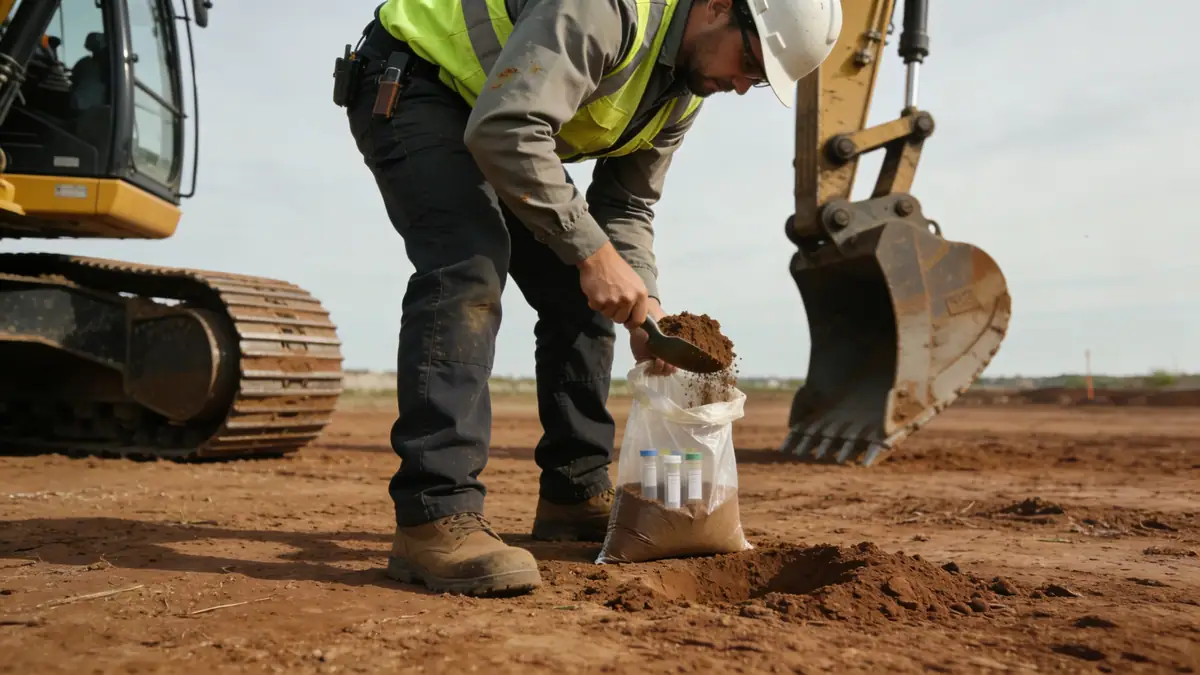
Our methodology for standard penetration test (SPT) in Whitby follows ASTM D1586, with a 63.5 kg hammer dropped 0.76 m to drive a split-spoon sampler. We typically sample at 1.5 m intervals to depths of 15-25 m, depending on project requirements. For continuous stratigraphic profiling, we also offer cone penetration test (cpt) services. Data is corrected for overburden and energy efficiency, providing N60 values for design. Our rigorous quality control ensures reliable results for local conditions.
Reference Technical Parameters
| Parameter | Reference Value |
|---|---|
| Predominant soil type | Glacial till and lacustrine deposits |
| Maximum seismic acceleration (PGA) | 0.20g (2015 NBCC) for Site Class C |
| Typical groundwater level | 2-5 m below grade |
| Bedrock depth | Variable, typically 10-30 m (Ordovician shale) |
| Typical N60 range | 10-50 blows/ft, depending on till density |
Local Considerations — Whitby
Whitby's subsurface is dominated by glacial till from the Oak Ridges Moraine and fine-grained lacustrine deposits from glacial Lake Iroquois. The water table is shallow (2-5 m) in many areas, requiring dewatering for deep excavations. Seismic hazard is moderate, with PGA of 0.20g per NBCC 2015. Older neighborhoods may have uncontrolled fill, while new developments often encounter stiff tills. Typical projects include mid-rise buildings and subdivisions. For comparison, see our standard penetration test en Toronto hub for regional context.
Request a Quote
Our team reviews your project and issues an initial report at no cost.
Or write us directly at [email protected]
Services in Whitby
Applicable Standards
- ASTM D1586
- NBCC 2015 (National Building Code of Canada)
- Ontario Building Code (OBC) 2012
- CSA A23.3 for foundation design
- ASTM D2487 (Unified Soil Classification)
Frequently Asked Questions
What soil types are common in Whitby for SPT?
Whitby's soils are primarily glacial tills (silty sand to sandy silt) and lacustrine clays/silts. These deposits are dense to very dense, with N60 values typically ranging from 10 to 50 blows/ft. Cohesive layers may exhibit low to medium plasticity.
Does Whitby require seismic site classification for SPT?
Yes, per NBCC 2015, Whitby has moderate seismic hazard. SPT N60 values are used to determine Site Class (A-F) for seismic design. Our SPT program includes energy correction and overburden adjustment to provide accurate N60 for classification.
Is geotechnical investigation mandatory for construction in Whitby?
The Ontario Building Code requires a geotechnical report for most buildings, especially those over 3 stories or with deep foundations. SPT is a standard method to assess bearing capacity and settlement potential. Local municipalities may also require subsurface investigations for permit approval.