
Methodology
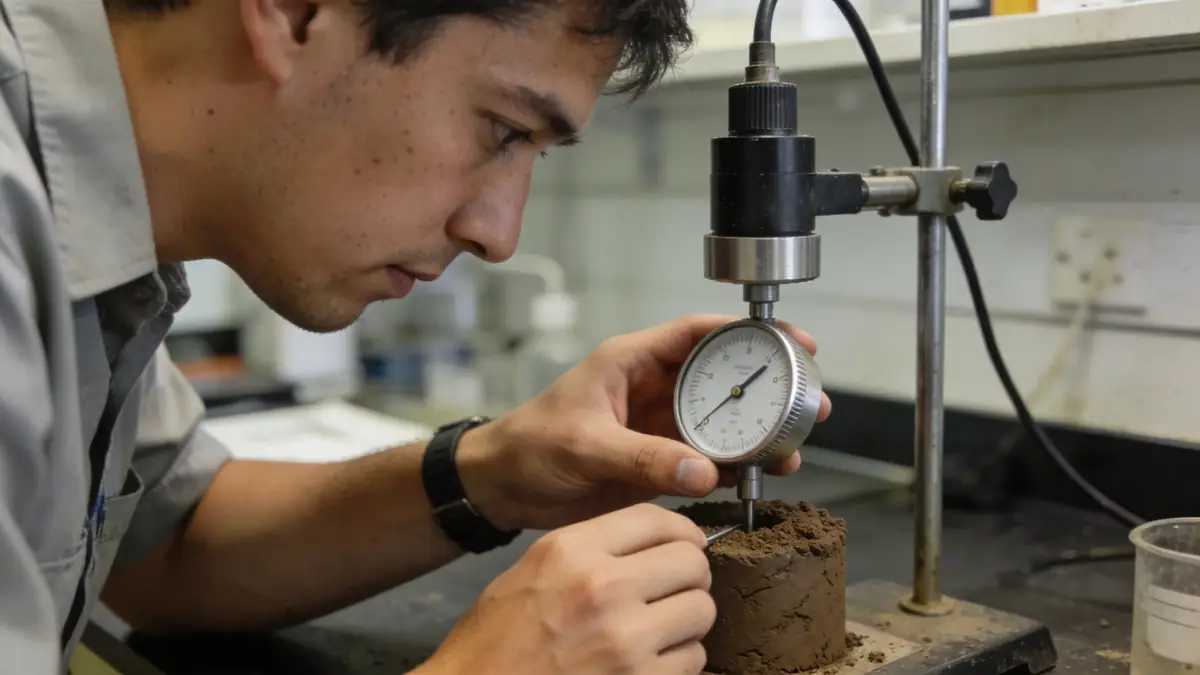
Our methodology for standard penetration test (SPT) in Terrebonne follows ASTM D1586, with split-spoon sampling at 1.5 m intervals to depths of 15–25 m, depending on project requirements. We also offer complementary techniques such as cone penetration test (CPT) for continuous profiling and dynamic probing for rapid assessments. Field procedures are adapted to local soil variability, with careful groundwater monitoring and energy efficiency corrections. All data is processed in-house to provide N60 values and stratigraphic logs, ensuring robust foundation design parameters.
Reference Technical Parameters
| Parameter | Reference Value |
|---|---|
| Predominant soil type | Glacial till, clay, sand |
| Maximum seismic acceleration (PGA) | 0.24 g (based on NBCC 2020) |
| Typical groundwater level | 2–5 m below surface |
| Bedrock depth | 10–30 m (shallow in north) |
| Typical N60 range | 5–30 blows/0.3 m |
Local Considerations — Terrebonne
Terrebonne's geology is dominated by Champlain Sea clay and glacial till, with depth to bedrock varying from 10 m in the north to over 30 m near the Mille-Îles River. Seismic hazard is moderate (PGA 0.24 g per NBCC 2020), requiring site-specific response analysis for structures over 6 stories. Groundwater is generally shallow (2–5 m), necessitating dewatering considerations. For projects requiring high-resolution profiling, our team recommends dpsh dynamic probing to complement SPT data. Our experience includes residential subdivisions and commercial towers throughout Terrebonne, including near the historic core and new developments along Route 337. We also coordinate with our standard penetration test en Montreal office for regional consistency.
Request a Quote
Our team reviews your project and issues an initial report at no cost.
Or write us directly at [email protected]
Services in Terrebonne
Applicable Standards
- ASTM D1586
- NBCC 2020 seismic provisions
- Quebec Construction Code (Chapter I, Building)
Frequently Asked Questions
What soil conditions are typical for standard penetration tests in Terrebonne?
Terrebonne typically features Champlain Sea clay, glacial till, and sand deposits. SPT N60 values range from 5 to 30 blows per 0.3 m in clay and till, with higher values in dense sand or near bedrock. Groundwater is often encountered at 2–5 m depth, influencing test procedures.
Are geotechnical investigations mandatory for construction in Terrebonne?
Yes, the Quebec Construction Code requires a geotechnical study for most buildings, especially those over 3 stories or in seismic zones. SPT is a key method to determine soil bearing capacity and liquefaction potential, ensuring compliance with NBCC 2020 seismic provisions.
How does seismic hazard affect standard penetration testing in Terrebonne?
Terrebonne is in a moderate seismic zone (PGA 0.24 g). SPT results are used to evaluate soil liquefaction and site class (A–F). For structures requiring detailed seismic analysis, we perform SPT with energy measurements and correlate N60 values to shear wave velocity per NBCC 2020.