Methodology

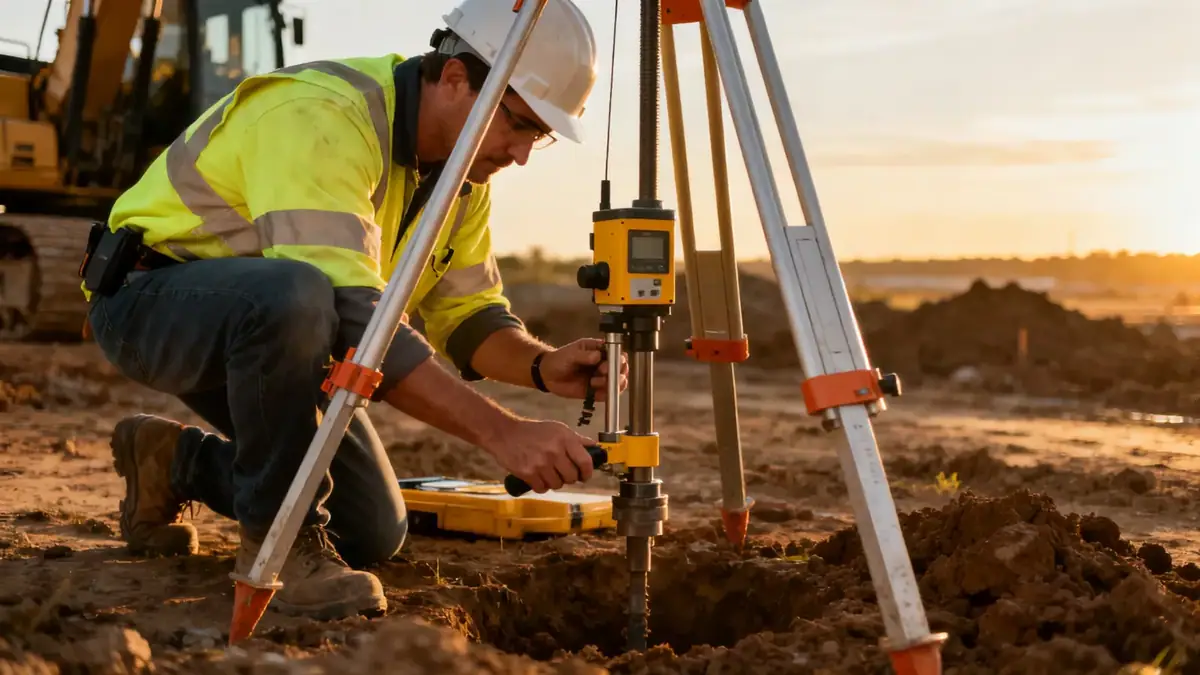
Our approach to standard penetration testing in Saint John Nb follows ASTM D1586, employing a 63.5-kg hammer dropped 0.76 m to drive a split-spoon sampler. We record blow counts per 150 mm increment, reporting N60 values corrected for energy efficiency. Testing is typically advanced in 1.0 to 1.5 m intervals to depths of 8–15 m for residential projects and up to 30 m for industrial sites. Soil samples are retrieved for laboratory classification, including moisture content and grain size analysis. Our team coordinates with local drilling contractors to adapt to site constraints, such as high groundwater tables or steep slopes. For detailed procedures, see our standard penetration test (spt) page.
Reference Technical Parameters
| Parameter | Reference Value |
|---|---|
| Predominant soil type | Glacial till, sand, and clay with occasional organic layers |
| Maximum seismic acceleration (PGA) | 0.15–0.20 g (NBCC 2020) |
| Typical groundwater level | 1.5–4 m below grade |
| Bedrock depth | Variable; 5–30 m, shallower in Uptown area |
| Typical N60 range | 4–30 blows/300 mm (sand); 8–50 (till) |
Local Considerations — Saint John Nb
Saint John Nb's geology is dominated by glacial till, with bedrock depths varying significantly between the Uptown area (shallow, 5–10 m) and the west side (deeper, 20–30 m). The high groundwater table, often within 2 m of the surface, requires careful dewatering and soil stabilization measures. Seismic hazard classification is moderate, with PGA values of 0.15–0.20 g per NBCC 2020. Our team has conducted numerous SPT investigations for waterfront developments, where marine sediments and soft clays present challenges. For projects requiring continuous profiling, we also offer cone penetration test (cpt) services. Our local experience ensures accurate interpretation of SPT results within Saint John's unique geological framework.
Request a Quote
Our team reviews your project and issues an initial report at no cost.
Or write us directly at [email protected]
Services in Saint John Nb
Applicable Standards
- ASTM D1586
- NBCC 2020
- CSA A23.3
- Saint John Building Bylaw
Frequently Asked Questions
What soil types are commonly encountered during SPT in Saint John Nb?
The area typically features glacial till, sand, and clay, with occasional organic deposits in low-lying areas. Bedrock is often encountered at depths of 5 to 30 meters, depending on location. Our SPT data helps characterize these layers for foundation design.
Is seismic design required for projects in Saint John Nb?
Yes, the National Building Code of Canada (NBCC 2020) assigns Saint John a moderate seismic hazard, with PGA values of 0.15–0.20 g. Standard penetration test results are used to evaluate soil liquefaction potential and site class for seismic design.
Are geotechnical investigations mandatory for construction in Saint John Nb?
While not always legally required for small residential projects, most commercial and industrial developments mandate a geotechnical investigation per local bylaws. Our standard penetration testing provides essential data for foundation design and regulatory compliance.