Methodology
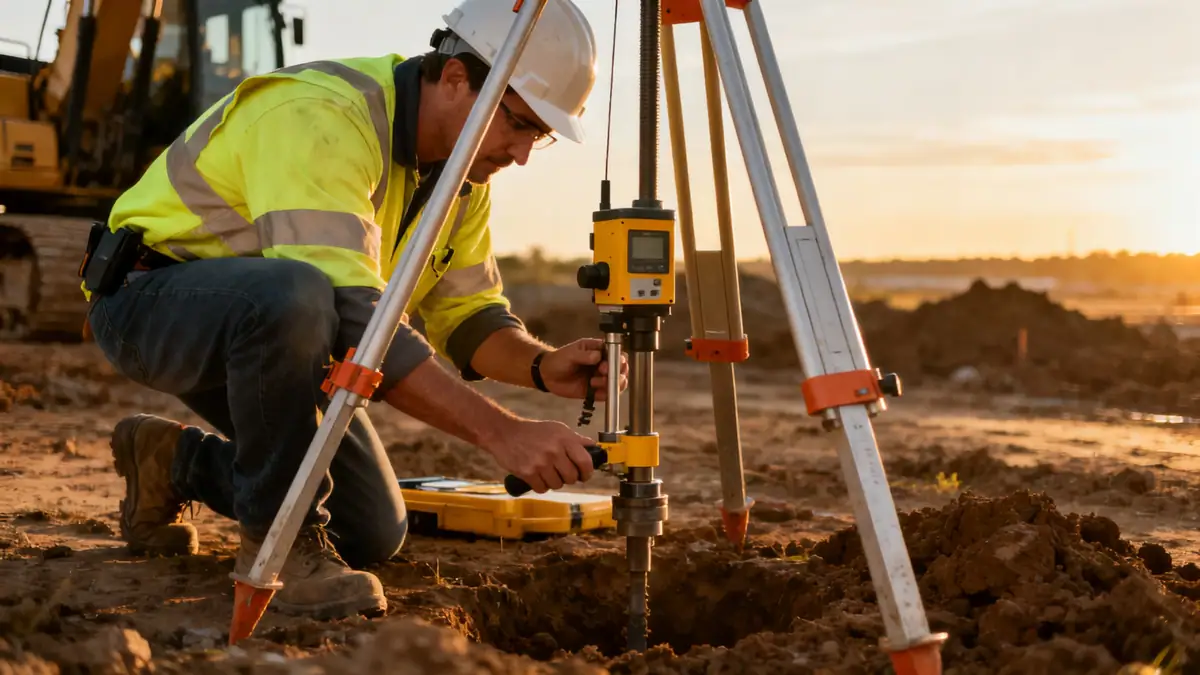
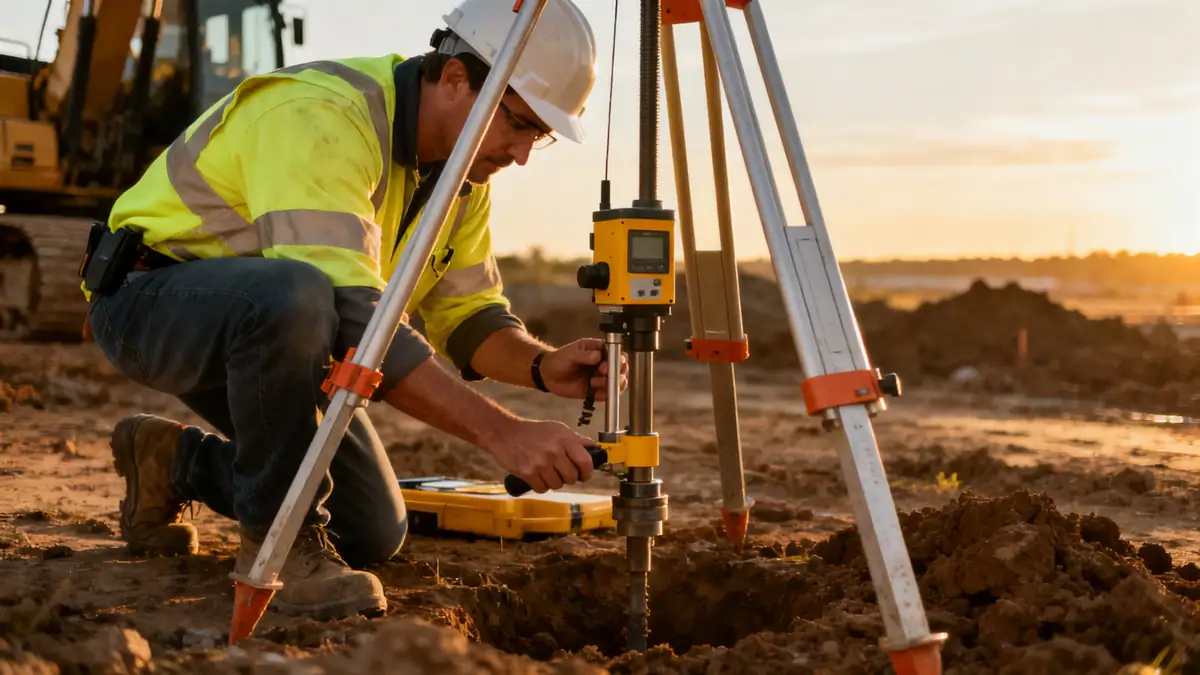
Our methodology for standard penetration testing in Saguenay follows ASTM D1586, employing a 63.5 kg hammer dropped 760 mm to drive a split-barrel sampler. Borings are advanced using hollow-stem augers or rotary drilling, with SPT performed at 1.5 m intervals or at every change in stratum. We record blow counts for each 150 mm increment, with N60 values corrected for hammer efficiency, rod length, and overburden pressure. Soil samples are logged in accordance with the Unified Soil Classification System (USCS) and transported to our laboratory for index testing, including natural moisture content and Atterberg limits. This rigorous approach, combined with local experience in Saguenay's glacial and marine deposits, provides accurate subsurface data for foundation design. For continuous profiling, we also offer cone penetration test (cpt) services.
Reference Technical Parameters
| Parameter | Reference Value |
|---|---|
| Predominant soil type | Glacial till (GM, GC) and marine clay (CH) in valleys |
| Maximum seismic acceleration (PGA) | 0.4 g (NBCC 2020 seismic hazard for Saguenay) |
| Typical groundwater level | 1.5–3.0 m below ground surface |
| Bedrock depth | 2–15 m (variable; shallow in upland areas) |
| Typical N60 range (till/clay) | 30–50 / 2–8 blows per 300 mm |
Local Considerations — Saguenay
Saguenay lies within the Charlevoix-Kamouraska seismic zone, requiring design for peak ground accelerations up to 0.4 g per NBCC 2020. The region's geology is dominated by Precambrian bedrock of the Canadian Shield, overlain by glacial till in upland areas and deep marine clays of the Laflamme Sea in the valleys. Groundwater levels are typically shallow in low-lying zones. Our team has extensive experience with standard penetration testing in Saguenay, addressing challenges such as soft clay sensitivity and boulder-rich till. We provide site-specific recommendations for foundation types, including deep foundations in clay and shallow footings on till. For broader regional context, see our standard penetration test en Montreal page.
Request a Quote
Our team reviews your project and issues an initial report at no cost.
Or write us directly at [email protected]
Services in Saguenay
Applicable Standards
- ASTM D1586
- NBCC 2020 (National Building Code of Canada)
- CSA A23.3 (Concrete Design)
- CAN/BNQ 2501-135 (Soil Sampling)
Frequently Asked Questions
What soil conditions are typical for standard penetration testing in Saguenay?
Saguenay soils range from dense glacial till and sand in upland areas to soft, sensitive marine clay (Champlain Sea clay) in valley bottoms. SPT is effective in till for bearing capacity assessment, while in clay, it provides N60 values that correlate with undrained shear strength for foundation design.
What seismic design requirements apply in Saguenay?
Saguenay is in a high-seismic zone (NBCC 2020) with PGA of 0.4 g. Site-specific SPT data are used to classify the site class (A–F) per NBCC, which determines amplification factors. Our testing ensures compliance with these seismic provisions for safe foundation design.
Is standard penetration testing mandatory for all projects in Saguenay?
While not mandatory for all projects, SPT is required for buildings of large area or height, as per NBCC and local bylaws. Our firm recommends SPT for any structure where soil variability or seismic risk may affect foundation performance, ensuring regulatory compliance and safety.