
Methodology
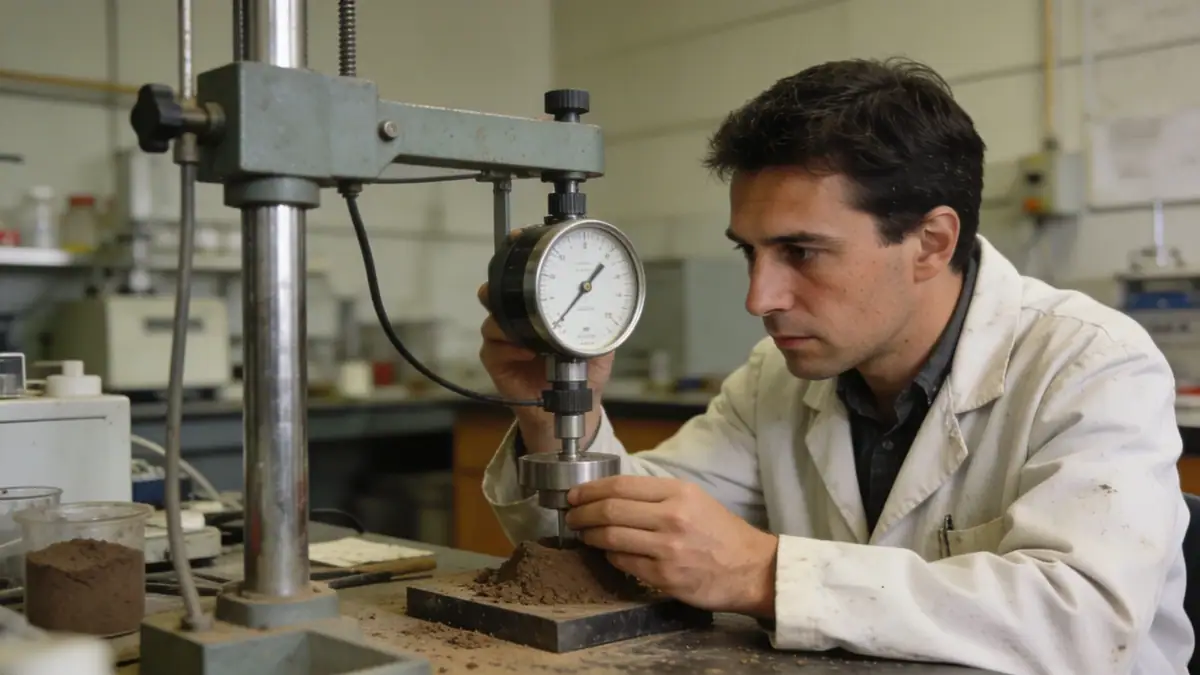
Our methodology for standard penetration test in Saanich follows the rigorous procedures outlined in ASTM D1586, ensuring consistent and reliable data collection. We deploy truck-mounted or track-mounted drill rigs to advance boreholes to depths ranging from 6 to 30 meters, depending on project requirements and subsurface conditions. The SPT is conducted at 1.5-meter intervals, recording blow counts (N-value) to evaluate soil density and strength. Disturbed samples are retrieved for laboratory classification, including grain size analysis and Atterberg limits. Our approach integrates continuous monitoring of groundwater levels and refusal conditions. For comprehensive subsurface profiling, we complement SPT with cone penetration test (cpt) where continuous stratigraphic data is required. All field data is processed and interpreted by experienced geotechnical engineers, providing actionable recommendations for foundation design.
Reference Technical Parameters
| Parameter | Reference Value |
|---|---|
| Predominant Soil Type | Glacial till, sand, silt, and clay with occasional gravel layers |
| Maximum Seismic Acceleration (PGA) | 0.2g to 0.35g (based on NBCC 2020 seismic hazard maps) |
| Typical Groundwater Level | 1.5 to 6 meters below grade, variable seasonally |
| Bedrock Depth | 10 to 50 meters (bedrock: Wark gneiss and granitic intrusions) |
| Typical N60 Range | 10 to 50 blows per 0.3 m (loose to dense granular soils) |
Local Considerations — Saanich
Saanich's subsurface is dominated by glacial till, outwash sands, and marine clays from the Fraser Glaciation. The region lies within the Cascadia subduction zone, requiring adherence to NBCC 2020 seismic provisions. Groundwater is commonly encountered at shallow depths (1.5–3 m) in low-lying areas near Cadboro Bay and along the Gorge Waterway, necessitating dewatering considerations. Bedrock depth varies significantly—shallow in the Highlands (5–15 m) to deep in the Saanich Peninsula (30+ m). Typical projects include residential subdivisions in Gordon Head and commercial developments in Uptown. For broader regional context, our standard penetration test services are coordinated from our main hub: standard penetration test en Vancouver.
Request a Quote
Our team reviews your project and issues an initial report at no cost.
Or write us directly at [email protected]
Services in Saanich
Applicable Standards
- ASTM D1586 (Standard Penetration Test)
- NBCC 2020 (National Building Code of Canada)
- BCBC 2024 (British Columbia Building Code)
- CSA A23.3 (Concrete Design for Seismic Zones)
Frequently Asked Questions
What are the typical soil conditions encountered in Saanich?
Saanich soils predominantly consist of glacial till (dense sand, silt, and gravel), with localized deposits of marine clay and organic peat in low-lying areas. The depth to bedrock varies from 10 to 50 meters, with groundwater levels typically between 1.5 and 6 meters below grade.
Is a standard penetration test required for residential construction in Saanich?
While not mandatory for all single-family dwellings, the District of Saanich often requires geotechnical reports for projects involving fill, steep slopes, or proximity to water bodies. Standard penetration test provides essential data for foundation design and seismic hazard assessment.
What seismic design parameters apply in Saanich?
Saanich is classified as Seismic Hazard Category 4 per NBCC 2020, with a peak ground acceleration (PGA) of 0.2g to 0.35g for a 2% probability of exceedance in 50 years. Site-specific spectral acceleration values are derived from the SPT N-values and shear wave velocity measurements.