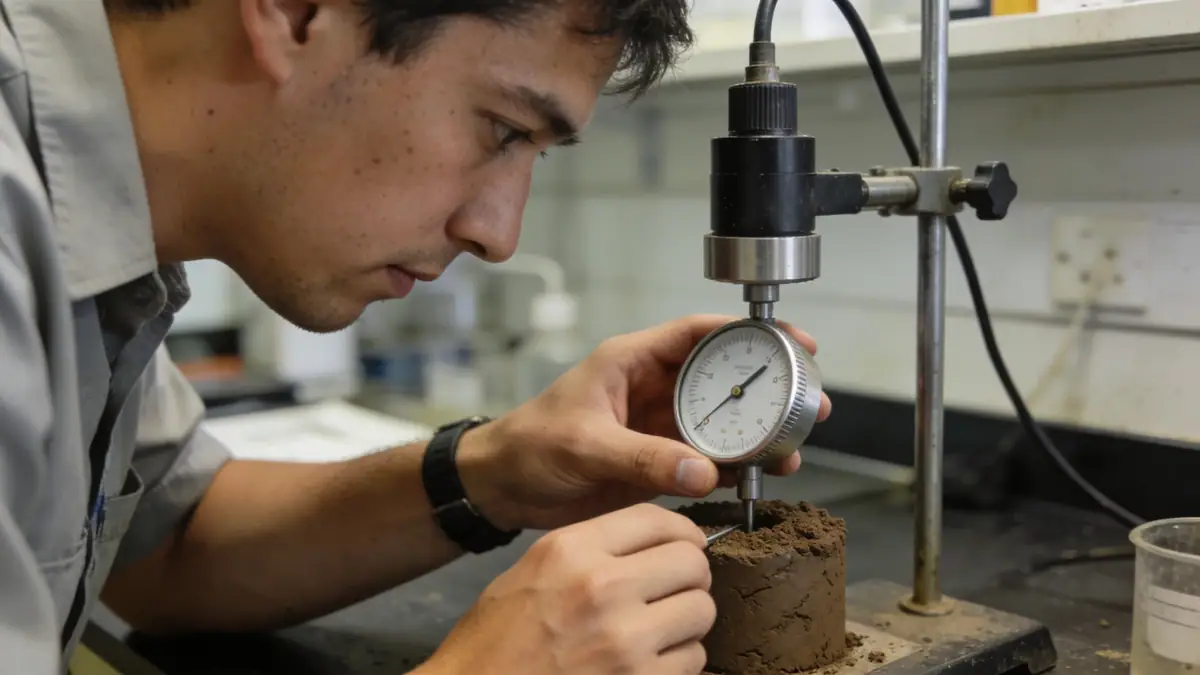
Methodology
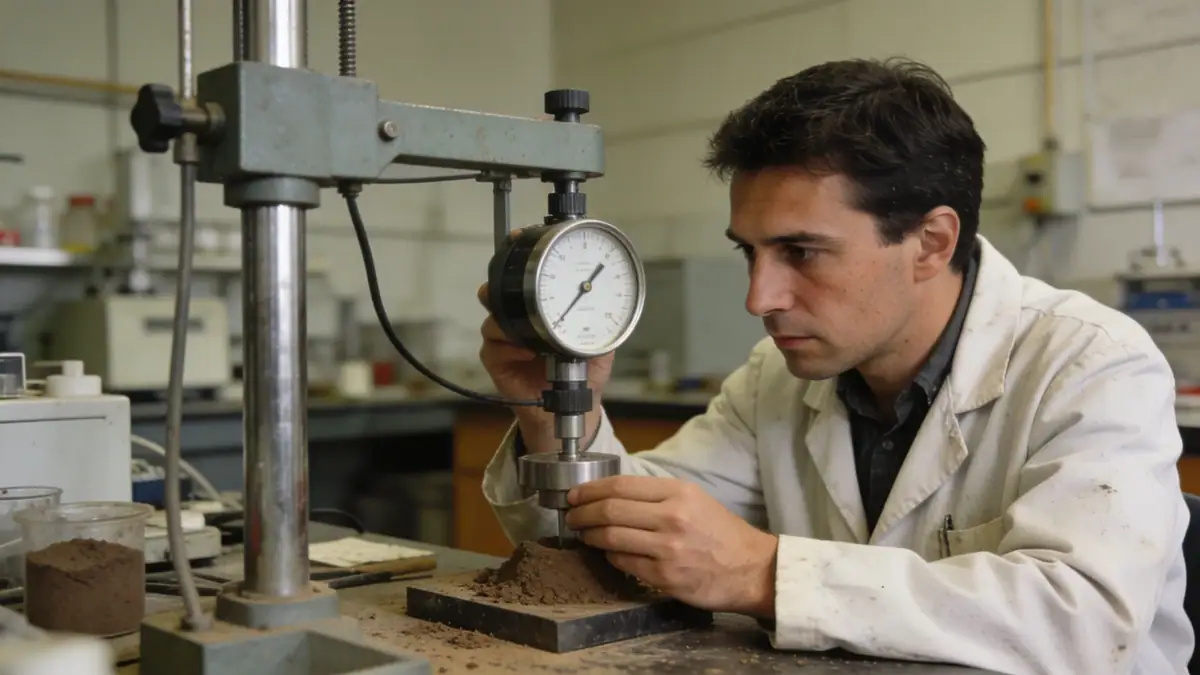
Our methodology for standard penetration test in Richmond Hill follows ASTM D1586 with continuous sampling at 1.5 m intervals. We use a 63.5 kg hammer with a 760 mm drop to determine N-values, corrected for energy efficiency. Data is processed to obtain N60 and N1,60 for liquefaction assessment. For soft soils, we complement with cone penetration test (cpt) for continuous profiling. Our team integrates results with local geological maps to refine stratigraphy. Each borehole is logged by a certified geotechnical engineer.
Reference Technical Parameters
| Parameter | Reference Value |
|---|---|
| Predominant soil type | Glacial till (silty clay with sand and gravel) |
| Maximum seismic acceleration (PGA) | 0.15 g (NBCC 2020, Site Class C) |
| Typical groundwater level | 6–10 m below ground surface |
| Bedrock depth | 20–40 m (Georgian Bay Shale) |
| Typical N60 range | 15–40 blows/0.3 m |
Local Considerations — Richmond Hill
Richmond Hill's geology is dominated by glacial till over shale bedrock, with localized sand lenses near the Oak Ridges Moraine. Groundwater is generally deep, but perched water may occur after heavy rain. Seismic hazard is moderate (PGA 0.15 g per NBCC 2020), requiring site-specific response analysis for buildings over 5 stories. Northern areas near Jefferson Side Road have deeper bedrock (>30 m), while southern areas near Highway 407 have shallower till and more variable soil. Our team routinely performs SPT in both residential subdivisions and high-rise projects. For regional context, our standard penetration test en Toronto provides additional references for similar urban settings. We also apply dpsh dynamic probing for rapid profiling of overburden thickness in preliminary investigations.
Request a Quote
Our team reviews your project and issues an initial report at no cost.
Or write us directly at [email protected]
Services in Richmond Hill
Applicable Standards
- ASTM D1586
- NBCC 2020
- Ontario Building Code 2012
- CSA A23.3
Frequently Asked Questions
What types of soil are commonly found in Richmond Hill?
Richmond Hill is underlain by glacial till consisting of silty clay with sand and gravel, overlying the Georgian Bay Formation shale. Localized deposits of sand and silt occur near the Oak Ridges Moraine. The till is typically stiff to hard, with N60 values ranging from 15 to 40.
Is seismic design required for buildings in Richmond Hill?
Yes, per NBCC 2020, Richmond Hill has a seismic hazard with PGA of 0.15 g for Site Class C. Buildings must consider site-specific seismic response, especially for structures over 5 stories or on soft soil. Standard penetration test provides N60 values for liquefaction assessment and site classification.
Are geotechnical investigations mandatory for construction in Richmond Hill?
The Ontario Building Code requires a geotechnical report for buildings with foundations, excavations exceeding 1.2 m depth, or structures on fill. Most municipalities also require SPT boreholes for permit applications. Our firm coordinates with local authorities to meet all regulatory requirements.