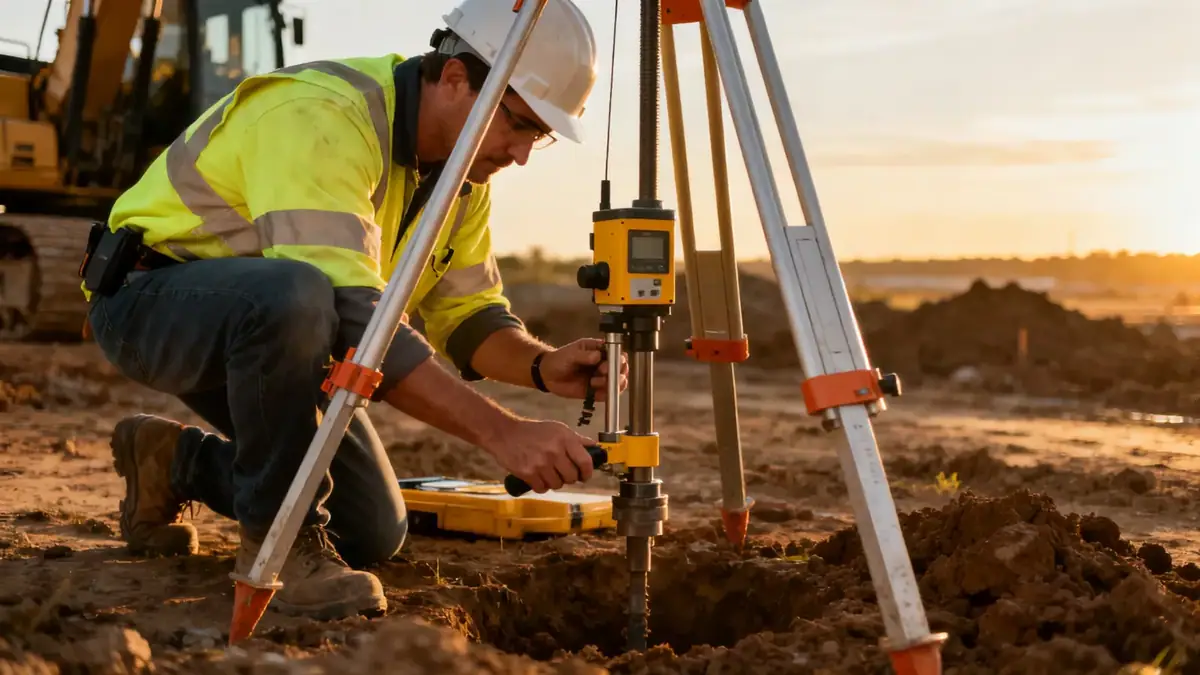
Methodology
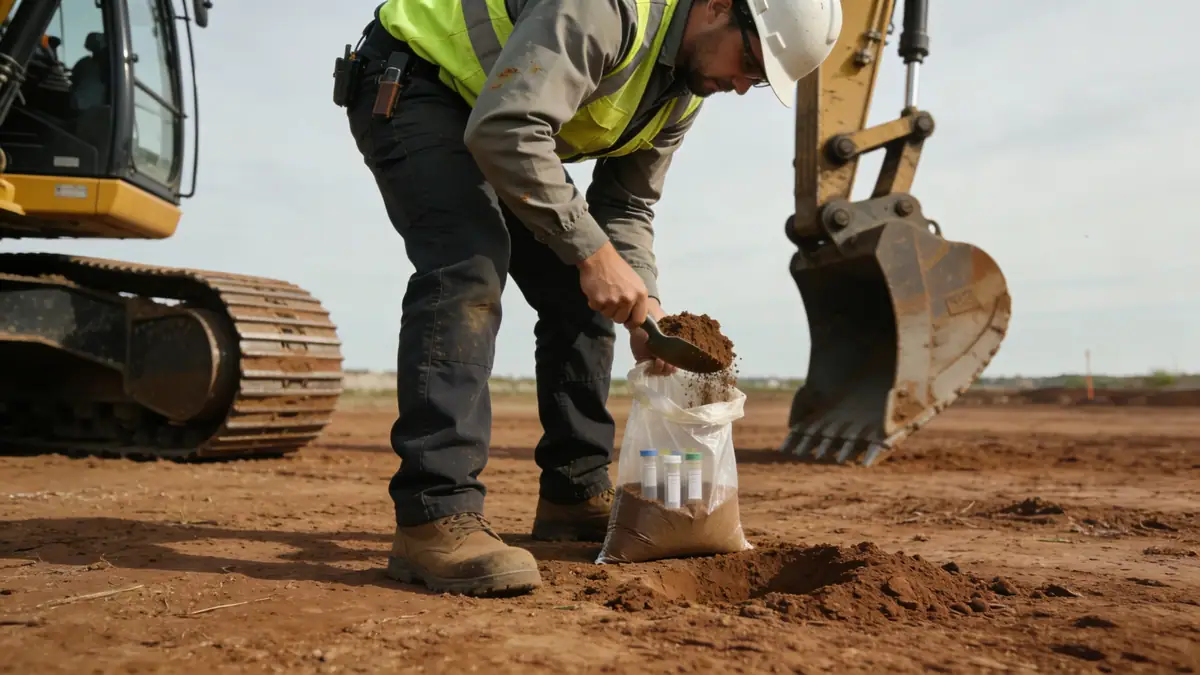
Our team executes standard penetration test (spt) following ASTM D1586, with a split-spoon sampler driven by a 63.5 kg hammer falling 0.76 m. In Mississauga, we typically advance boreholes to depths of 8–15 m for residential projects and up to 30 m for industrial or high-rise structures, depending on bedrock depth and soil variability. Sampling intervals are set at 1.0–1.5 m, with continuous sampling in critical zones. All fieldwork is supervised by experienced geotechnical engineers, and data is analyzed to calculate N60 values, corrected for overburden and energy efficiency. This approach provides a robust foundation for subsequent laboratory testing and geotechnical recommendations.
Reference Technical Parameters
| Parameter | Reference Value |
|---|---|
| Predominant soil type | Glacial till (silty sand with gravel) over lacustrine clay/silt |
| Maximum seismic acceleration (PGA) | 0.1–0.2 g (per OBC 2012, site-specific analysis required) |
| Typical groundwater level | 2–5 m below grade, variable with season and location |
| Bedrock depth | 5–15 m in northern areas; 15–30+ m in southern areas |
| Typical N60 range | 10–30 blows/0.3 m in till; 2–15 blows/0.3 m in clay |
Local Considerations — Mississauga
Mississauga's geology is dominated by glacial till overlying shale bedrock in the north, while southern areas feature deeper lacustrine deposits. Seismic hazard is moderate (PGA 0.1–0.2 g per OBC 2012), requiring site-specific response analysis for tall structures. Groundwater levels are shallow near Lake Ontario, complicating excavation and foundation design. Our team regularly addresses these conditions, linking local findings to standard penetration test en Toronto for regional correlation. Typical challenges include boulders in till and soft clays requiring deeper foundations or ground improvement.
Request a Quote
Our team reviews your project and issues an initial report at no cost.
Or write us directly at [email protected]
Services in Mississauga
Applicable Standards
- ASTM D1586
- Ontario Building Code 2012 (OBC)
- CSA A23.3
- National Building Code of Canada 2015
Frequently Asked Questions
What soil types are commonly encountered during standard penetration test in Mississauga?
Mississauga soils primarily consist of glacial till (silty sand with gravel) in the north and lacustrine clays and silts in the south. Occasionally, organic deposits are found near old creek beds. The variability requires careful testing to characterize strength and compressibility for foundation design.
Is a standard penetration test mandatory for building permits in Mississauga?
While not always mandatory, the Ontario Building Code requires geotechnical investigation for most structures, especially those with deep foundations or in seismic zones. Standard penetration test provides essential data for foundation design and is typically required by engineers to meet code compliance.
How does seismic hazard affect standard penetration test requirements in Mississauga?
Mississauga lies in a moderate seismic zone (PGA 0.1–0.2 g). Standard penetration test data is used to evaluate soil liquefaction potential and site classification per OBC. For critical structures, additional testing such as shear wave velocity measurements may be recommended.