Methodology
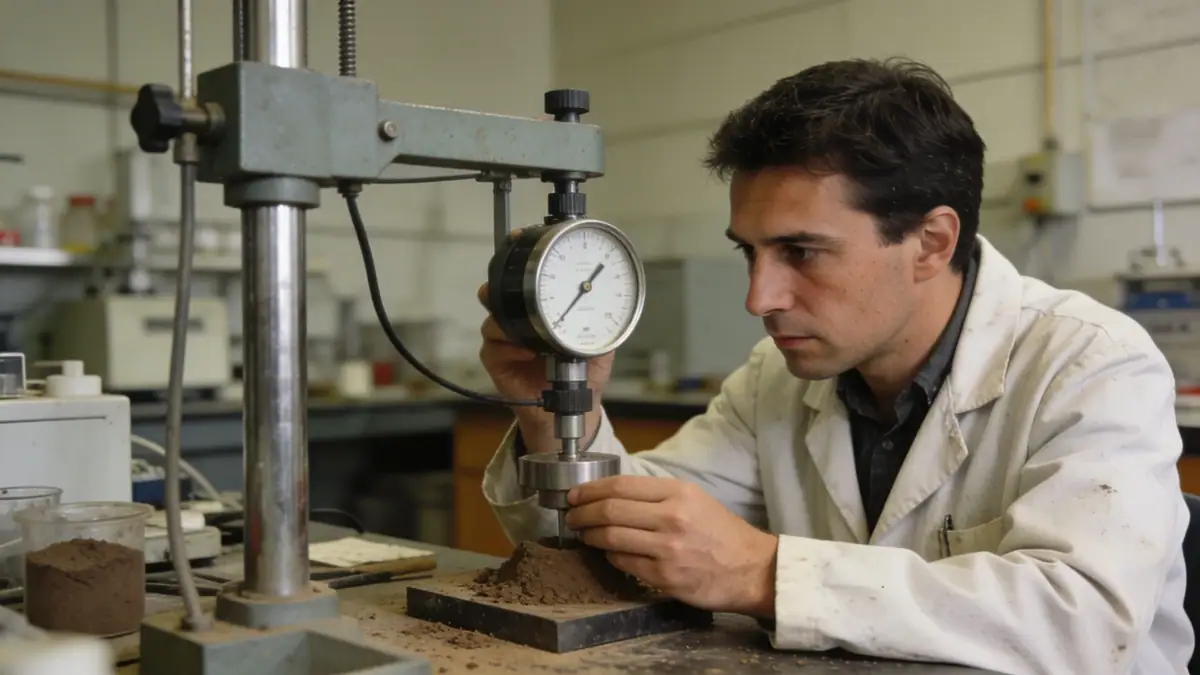
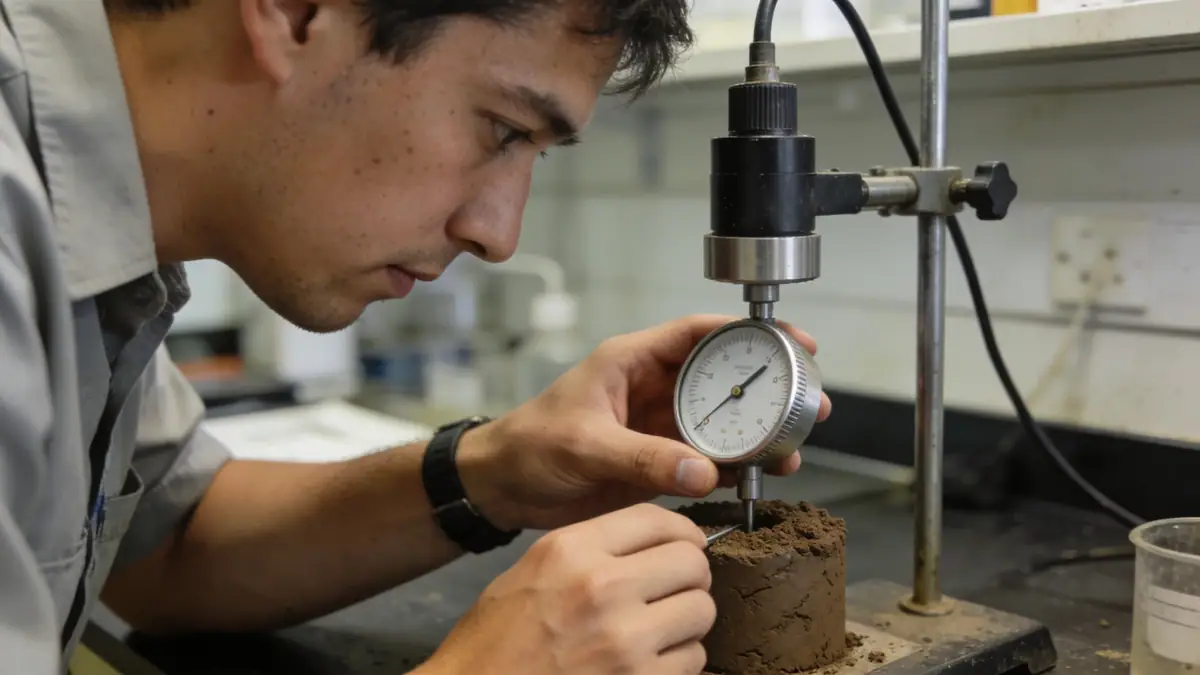
Our methodology for standard penetration test (SPT) in Markham adheres strictly to ASTM D1586. A 63.5 kg hammer drops 760 mm to drive a split-spoon sampler, recording blows per 150 mm increment. We log N-values continuously from surface to termination depth, typically 15–25 m in Markham’s till. Samples are sealed for moisture content, grain size, and Atterberg limits per ASTM D6913 and D4318. For continuous profiling, we recommend cone penetration test (cpt) as a complementary method. All equipment is calibrated semiannually to maintain accuracy.
Reference Technical Parameters
| Parameter | Reference Value |
|---|---|
| Predominant soil type | Glacial till (silty sand to sandy silt) |
| Peak ground acceleration (PGA) | 0.15–0.20 g (per NBCC 2020) |
| Typical groundwater level | 3–8 m below grade |
| Bedrock depth | 10–25 m (Ordovician shale) |
| Typical N60 range | 20–50 blows/300 mm (till) |
Local Considerations — Markham
Markham’s subsurface is dominated by glacial till deposited during the Wisconsin glaciation, characterized by dense silty sand to sandy silt with cobbles. Groundwater levels vary seasonally, typically 3–8 m deep. Seismic hazard per NBCC 2020 yields PGA up to 0.20g, requiring site-specific spectral analysis. Older neighborhoods near historic Unionville may have deeper fill, while new subdivisions in Cornell encounter competent till. For reliable characterization, our team integrates SPT with dpsh dynamic probing to map till density and identify soft zones. Our regional experience includes high-rise towers and low-rise subdivisions, always referencing standard penetration test en Toronto for broader context.
Request a Quote
Our team reviews your project and issues an initial report at no cost.
Or write us directly at [email protected]
Services in Markham
Applicable Standards
- NBCC 2020 (National Building Code of Canada)
- ASTM D1586 (Standard Test Method for SPT)
- ASTM D2487 (Unified Soil Classification)
- Ontario Building Code (OBC) Part 4
- CSA A23.3 (Concrete Design)
Frequently Asked Questions
What soil types are encountered in Markham during SPT?
Markham’s soils are predominantly glacial tills, consisting of dense silty sand to sandy silt with occasional cobbles and boulders. Below the till, Ordovician shale bedrock is encountered at depths of 10–25 m. SPT blow counts (N60) typically range from 20 to 50 in the till, indicating competent bearing strata for shallow and deep foundations.
Is SPT mandatory for building permits in Markham?
Under the Ontario Building Code, a geotechnical investigation—including SPT—is required for any structure with foundation loads exceeding 75 kN/m or for buildings in seismic zones. Markham’s seismic hazard (PGA 0.15–0.20g) mandates site-specific soil data to determine seismic site class and foundation design parameters.
How does Markham’s seismic zone affect SPT requirements?
Markham falls within NBCC 2020 seismic zone with PGA up to 0.20g. SPT provides N60 values essential for calculating soil liquefaction potential and seismic site class (A–F). Our team uses these data to develop design spectra and recommend foundation systems compatible with local till conditions.