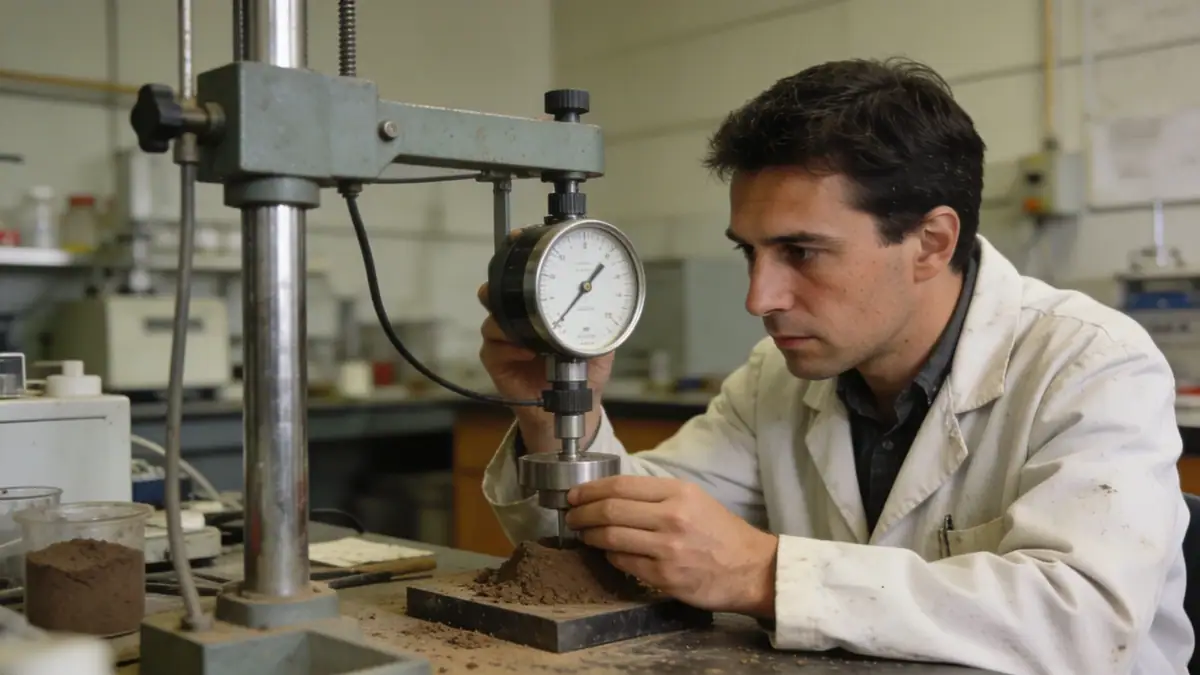
Methodology
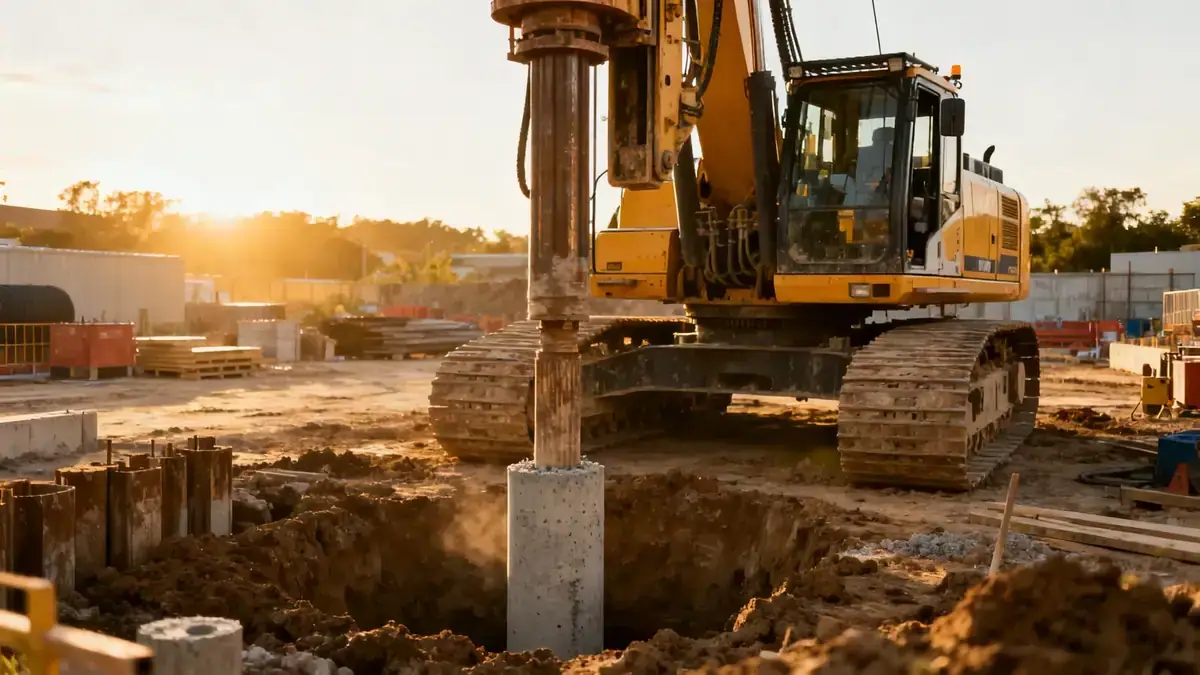
Our methodology for standard penetration test in London Ontario follows ASTM D1586, with a safety hammer and split-spoon sampler advanced at 1.5-meter intervals. We record N-values corrected for overburden (N60) and energy efficiency. In cohesive soils, we measure recovery ratios and classify samples per USCS. For granular layers, we assess relative density. Our team integrates SPT data with cone penetration test (cpt) soundings for continuous profiles. We also perform dynamic probing (DPSH) in difficult access areas. All equipment is calibrated annually, and field procedures comply with Ontario Regulation 406/19 for occupational safety.
Reference Technical Parameters
| Parameter | Reference Value |
|---|---|
| Predominant soil type | Glacial till, silty clay, sand and gravel |
| Maximum seismic acceleration (PGA) | 0.15g to 0.20g (per NBCC 2020) |
| Typical groundwater level | 2 to 5 meters below surface |
| Bedrock depth | 20 to 40 meters (Devonian limestone) |
| Typical N60 range | 5 to 30 blows per 0.3 m |
Local Considerations — London Ontario
London Ontario's geology features glacial till overlying Devonian limestone, with varying clay and sand deposits. Groundwater is typically shallow (2–5 m), requiring dewatering for excavations. Seismic hazard is moderate per NBCC 2020, with PGA up to 0.20g. Soil conditions vary between residential areas (stiff clays) and industrial zones (sands/gravels). Common projects include low-rise foundations and road embankments. Our team integrates standard penetration test data with local experience. For projects requiring broader regional context, see our standard penetration test en Toronto page.
Request a Quote
Our team reviews your project and issues an initial report at no cost.
Or write us directly at [email protected]
Services in London Ontario
Applicable Standards
- ASTM D1586
- National Building Code of Canada (NBCC) 2020
- Ontario Regulation 406/19 (Construction Projects)
- CSA A23.3 (Concrete Design)
- Ontario Building Code (OBC) 2012
Frequently Asked Questions
What soil types are common in London Ontario for SPT?
London Ontario typically features glacial till, silty clay, and sand/gravel layers. SPT N-values range from 5 to 30, with stiff clays in residential areas and denser sands near the Thames River.
Is seismic design required for foundations in London Ontario?
Yes, per NBCC 2020, London Ontario is in a moderate seismic zone (PGA 0.15g–0.20g). Site-specific SPT data is used to determine soil classification (Site Class D or E) and liquefaction potential.
Are geotechnical investigations mandatory for new buildings in London?
The Ontario Building Code requires subsurface investigations for most structures. Standard penetration testing is a common method to verify bearing capacity and settlement criteria.