Methodology
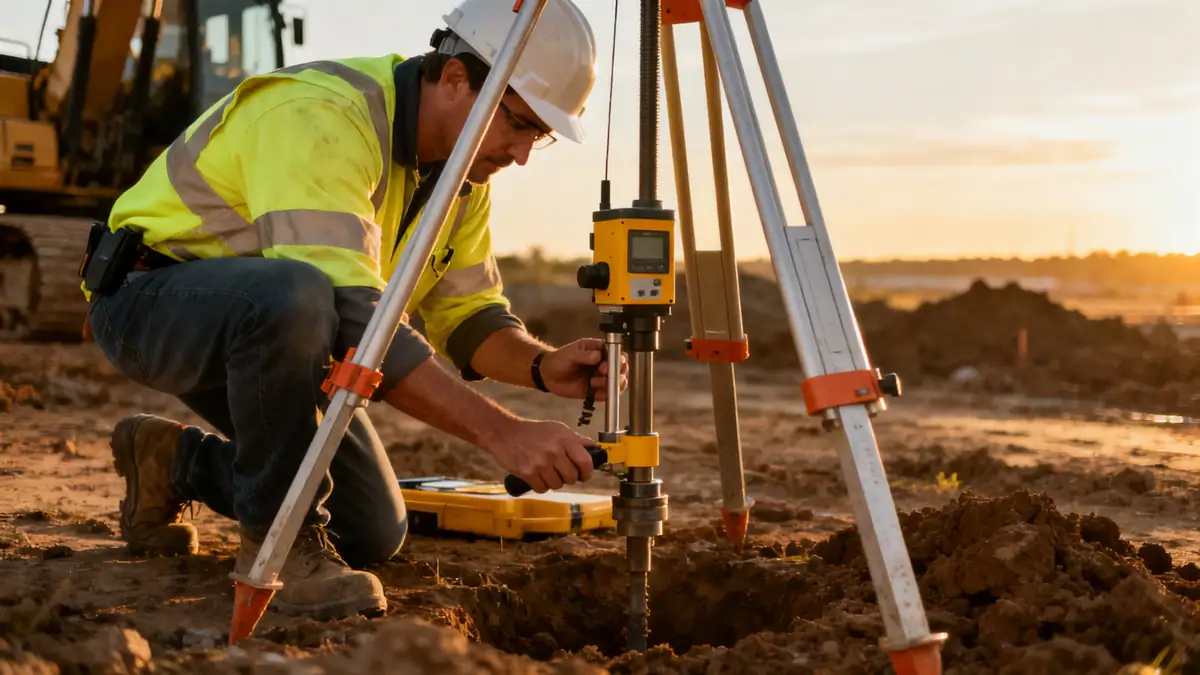
Our standard penetration testing methodology follows rigorous ASTM D1586 protocols, using a 63.5 kg hammer dropped 760 mm to drive a split-spoon sampler. In Levis, we typically conduct borings to depths of 10–30 meters depending on project requirements, with sampling intervals every 1.5 meters. The SPT N-value is corrected for energy efficiency (N60) and overburden pressure. For detailed soil profiling, we integrate these results with cone penetration test (cpt) data to enhance stratigraphic interpretation. All fieldwork is supervised by experienced geotechnical engineers.
Reference Technical Parameters
| Parameter | Reference Value |
|---|---|
| Predominant soil type | Glacial till, marine clay, and alluvial deposits |
| Maximum seismic acceleration (PGA) | 0.24g (per NBCC 2020) |
| Typical groundwater level | 2–5 m below ground surface |
| Bedrock depth | 10–30 m (shallow in western areas) |
| Typical N60 range | 4–15 blows/ft in clay; 20–50 in till |
Local Considerations — Levis
Levis sits on the south shore of the St. Lawrence River, underlain by Champlain Sea clay and glacial tills. The clay is sensitive and prone to settlement, requiring careful evaluation of N-values. Seismic hazard is moderate (NBCC 2020 PGA 0.24g), with potential for liquefaction in loose sands. Western Levis has shallow bedrock, while eastern areas feature thicker soft soils. Typical projects include residential foundations and riverfront developments. For deeper investigations, our team in standard penetration test (spt) can be coordinated from our Montreal hub: standard penetration test en Montreal.
Request a Quote
Our team reviews your project and issues an initial report at no cost.
Or write us directly at [email protected]
Services in Levis
Applicable Standards
- ASTM D1586
- NBCC 2020 Seismic Provisions
- CSA A23.3 Concrete Design
- Quebec Construction Code (Chapter I-1)
Frequently Asked Questions
What soil types are commonly found in Levis?
Levis predominantly features Champlain Sea clay, a sensitive marine clay, along with glacial till and alluvial deposits along the St. Lawrence. These soils require careful evaluation for compressibility and strength using standard penetration testing.
Is seismic design required for projects in Levis?
Yes, according to NBCC 2020, Levis falls under seismic hazard category with a PGA of 0.24g. Geotechnical reports must include site classification and liquefaction potential based on SPT N-values.
Are geotechnical studies mandatory for construction in Levis?
For most building permits, the Quebec Construction Code requires a geotechnical investigation. Standard penetration testing provides essential data for foundation design, especially in variable soil conditions across Levis.