
Methodology
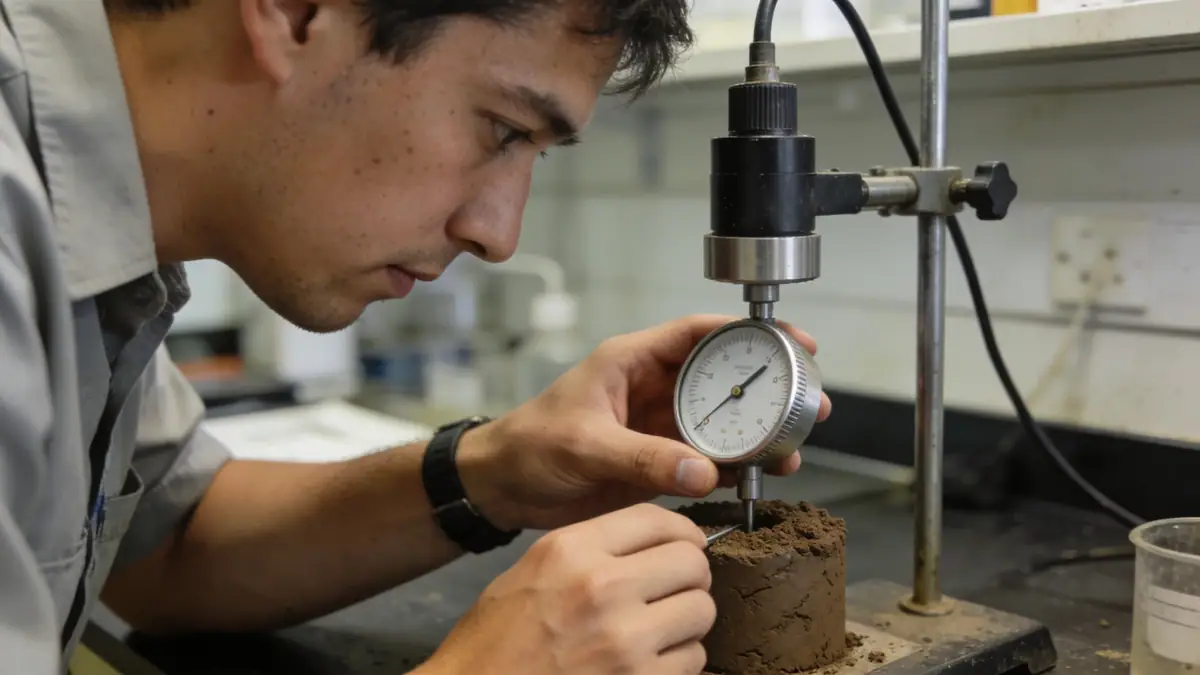
Our standard penetration testing methodology in Coquitlam follows ASTM D1586, with split-spoon sampling at 1.5 m intervals to refusal or target depth. Each test records blow counts per 300 mm (N-value) and retrieves disturbed samples for classification. We perform SPT borings using truck- or track-mounted rigs, typically reaching depths of 8–15 m for residential projects and up to 30 m for industrial sites. Corrections for overburden pressure (N60) and hammer energy efficiency are applied. For detailed soil profiling, we often complement SPT with cone penetration test (cpt). All field data is compiled in certified logs with groundwater observations and refusal criteria.
Reference Technical Parameters
| Parameter | Reference Value |
|---|---|
| Predominant soil type | Glacial till, alluvial silts and sands, organic deposits |
| Maximum seismic acceleration (PGA) | 0.35–0.45 g (NBCC 2020, Site Class C/D) |
| Typical groundwater level | 2–6 m below surface, varies seasonally |
| Bedrock depth | 10–50 m (sedimentary bedrock, mainly sandstone) |
| Typical N60 range | 10–30 in alluvial soils; >50 in till/bedrock |
Local Considerations — Coquitlam
Coquitlam's geology spans from Fraser River floodplain deposits (soft silts, sands, and peat) to glacial tills and bedrock on the northern slopes. Seismic hazard is significant due to the Cascadia subduction zone and local crustal faults (NBCC 2020 assigns PGA up to 0.45g). Liquefaction potential exists in saturated lowland areas, requiring detailed SPT-based liquefaction analysis per NCEER procedures. In contrast, the Eagle Mountain area presents dense till with high bearing capacity. Our team integrates local geotechnical data, including borehole records from nearby developments, to refine site models. For broader regional context, we collaborate with our standard penetration test en Vancouver hub to ensure consistency across the Lower Mainland.
Request a Quote
Our team reviews your project and issues an initial report at no cost.
Or write us directly at [email protected]
Services in Coquitlam
Applicable Standards
- ASTM D1586 (Standard Test Method for Standard Penetration Test)
- NBCC 2020 (National Building Code of Canada – seismic provisions)
- BCBC 2018 (British Columbia Building Code)
- Canadian Foundation Engineering Manual (CFEM, 5th Edition)
- CSA A23.3 (Design of Concrete Structures – foundation requirements)
Frequently Asked Questions
What soil types are commonly encountered during SPT in Coquitlam?
Coquitlam soils range from recent alluvial deposits (silts, sands, and organic layers) in the southwest to glacial tills and weathered sandstone in the northeast. Marine clays and peat are also present in low-lying areas. SPT N-values help distinguish these layers, with soft soils showing N60 < 10 and dense tills exceeding N60 > 50.
Is seismic site classification required for construction in Coquitlam?
Yes. NBCC 2020 mandates seismic site classification (Site Class A–F) based on average shear wave velocity (Vs30) or SPT N60. Coquitlam sites are typically Class C (very dense soil) or D (stiff soil). For liquefaction-prone zones, additional SPT-based analyses are required to calculate cyclic resistance ratio (CRR).
Are geotechnical investigations mandatory for residential projects in Coquitlam?
While not always required for single-family homes on stable till, the City of Coquitlam may request a geotechnical study for properties in steep slopes, floodplains, or areas with suspected fill. For multi-unit or commercial buildings, SPT borings are standard to confirm bearing capacity, settlement, and seismic design parameters per BCBC.