
Methodology
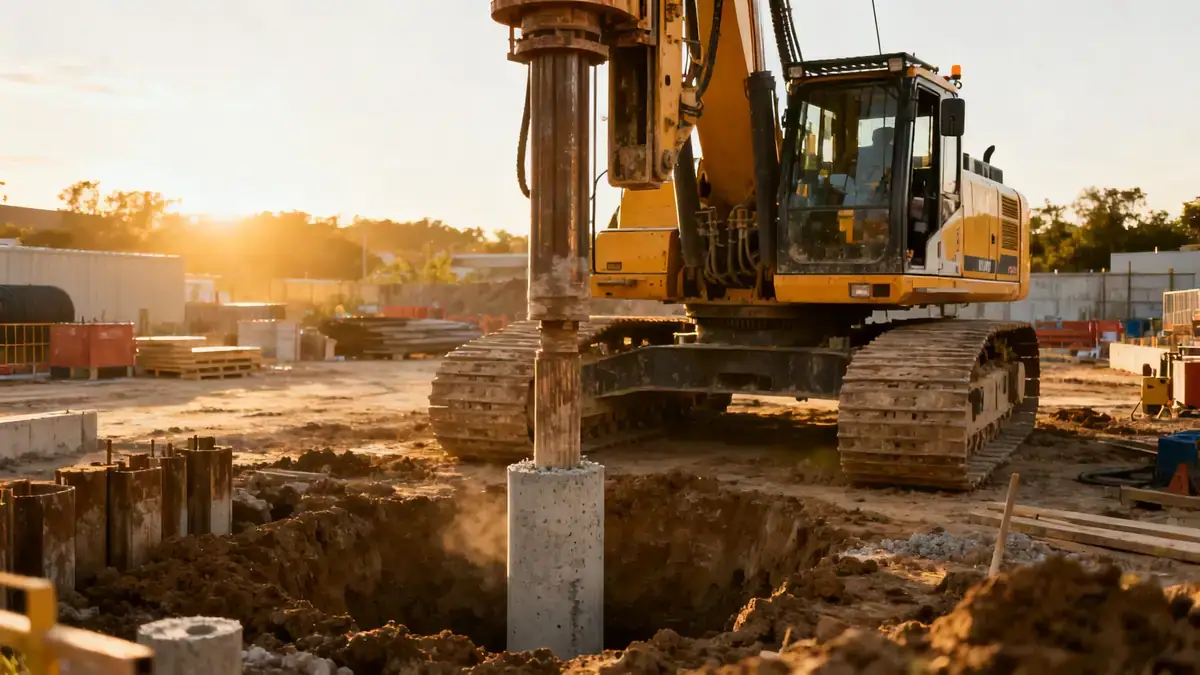
Our methodology for standard penetration test in Clarington follows ASTM D1586, using a 63.5 kg hammer dropped 760 mm to drive a split-barrel sampler. We record blow counts (N-values) at 1.5 m intervals or at changes in strata, with continuous sampling in cohesive soils. The standard penetration test (spt) provides essential data for bearing capacity and settlement analysis. Our team also integrates cone penetration test (CPT) where continuous profiling is advantageous, and dynamic probing for rapid assessments.
Reference Technical Parameters
| Parameter | Reference Value |
|---|---|
| Predominant soil type | Glacial till (silty sand to sandy silt) and lacustrine clay |
| Maximum seismic acceleration (PGA) | 0.20g to 0.30g (NBCC 2020, Site Class C/D) |
| Typical groundwater level | 2–6 m below ground surface (variable seasonally) |
| Bedrock depth | 10–30 m (shallow in northern areas) |
| Typical N60 range | 4–30 blows/300 mm (clay to dense till) |
Local Considerations — Clarington
Clarington's subsurface is shaped by glacial Lake Iroquois and subsequent lacustrine deposits. Along the lakefront, soft to firm clays extend up to 15 m, underlain by glacial till. In the north, stiff tills and sands are common, with bedrock (limestone/shale) at depths of 10–30 m. Seismic site classification per NBCC 2020 typically yields Site Class C or D, with PGA up to 0.30g. Our team adapts drilling methods to these conditions, using mud rotary for clay and augering for till. For deeper investigations, we coordinate with cone penetration test (cpt) services to obtain continuous profiles. Compared to our standard penetration test en Toronto, Clarington projects often encounter higher groundwater and softer lacustrine clays, requiring careful dewatering and casing.
Request a Quote
Our team reviews your project and issues an initial report at no cost.
Or write us directly at [email protected]
Services in Clarington
Applicable Standards
- ASTM D1586
- NBCC 2020 (National Building Code of Canada)
- Ontario Building Code (OBC) Part 4 – Foundations
- CSA A23.3 – Design of Concrete Structures
Frequently Asked Questions
What soil conditions are typical for standard penetration test in Clarington?
Clarington soils range from lacustrine clays and silts near Lake Ontario to glacial tills and sands in the north. SPT blow counts (N60) vary from 4–10 in soft clays to 20–30 in dense tills, indicating competent bearing strata at moderate depths.
How does seismic site classification affect SPT testing in Clarington?
Seismic site classification per NBCC 2020 requires SPT N60 values to determine Site Class (A–F). In Clarington, typical Site Class C (very dense soil/soft rock) or D (stiff soil) is common, with PGA up to 0.30g. SPT data directly influences design spectra and foundation requirements.
Is a geotechnical investigation mandatory for residential construction in Clarington?
The Ontario Building Code mandates a geotechnical report for buildings on deep foundations, in floodplains, or where soil conditions are suspect. For typical single-family homes, a geotechnical investigation is recommended but not always required. Our team advises based on site-specific risk.