
Methodology
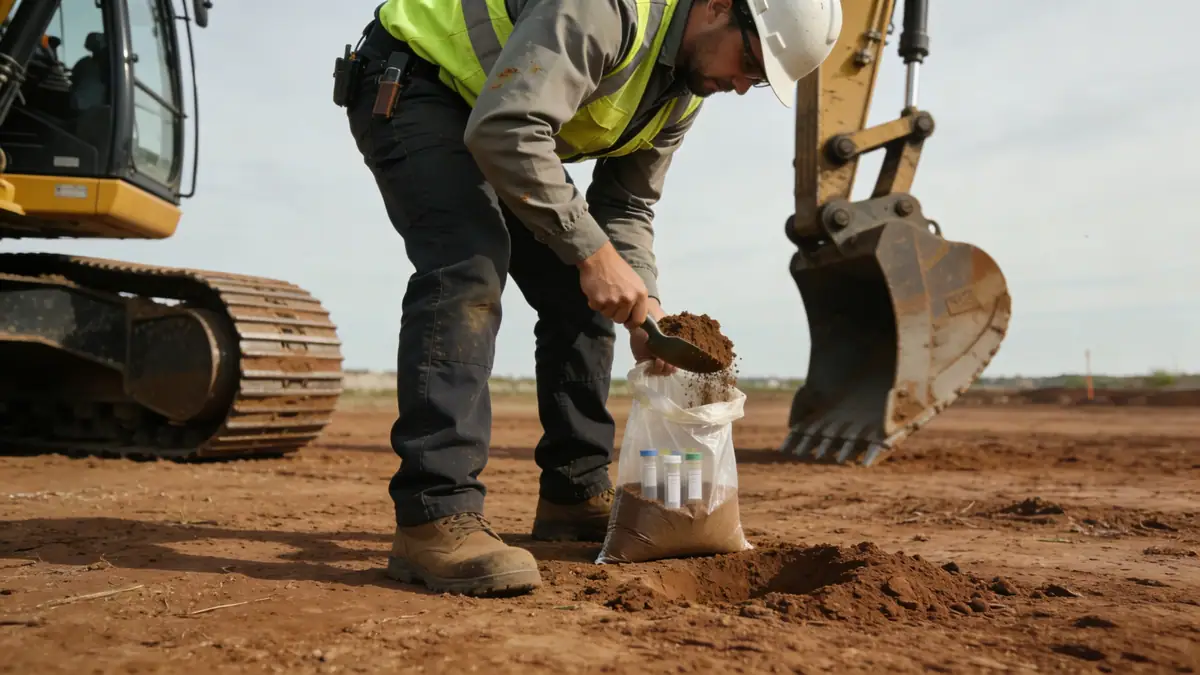
Our methodology for standard penetration test in Brampton adheres to ASTM D1586, employing a 63.5 kg hammer dropped 760 mm to drive a split-spoon sampler. We record blow counts per 150 mm increment, reporting N-values corrected for energy efficiency (N60). Sampling intervals are typically 1.5 m, with continuous sampling in critical zones. This data integrates with laboratory testing, including grain size analysis and Atterberg limits, to classify soils per the Unified Soil Classification System. For detailed profiling, we complement SPT with cone penetration test (cpt), providing continuous stratigraphic logs. Our approach ensures reliable parameters for foundation design and seismic assessment in Brampton.
Reference Technical Parameters
| Parameter | Reference Value |
|---|---|
| Predominant soil type | Glacial till, silty clay, sand and gravel |
| Maximum seismic acceleration (PGA) | 0.15–0.25 g (per NBCC 2020 for Brampton) |
| Typical groundwater level | 1.5–4.0 m below ground surface |
| Bedrock depth | 5–15 m (shallow in north, deeper in south) |
| Typical N60 range (silty clay) | 4–15 blows per 300 mm |
Local Considerations — Brampton
Brampton's geology is dominated by glacial till and lacustrine deposits from Lake Ontario's historic extent. The northern areas feature dense till with cobbles, requiring careful SPT procedures to avoid refusal. Downtown, softer silty clays and high groundwater (1.5–3 m) pose challenges for excavations and shallow foundations. Seismic hazard, per NBCC 2020, yields PGA values up to 0.25 g, necessitating Site Class D (stiff soil) evaluations. Our team adapts sampling programs to these conditions, ensuring representative N-values. For projects requiring deeper insight, we coordinate with our team in Toronto to leverage regional expertise. Local regulations mandate geotechnical reports for all significant structures, making reliable SPT data essential.
Request a Quote
Our team reviews your project and issues an initial report at no cost.
Or write us directly at [email protected]
Services in Brampton
Applicable Standards
- ASTM D1586
- NBCC 2020 (National Building Code of Canada)
- OBC 2012 (Ontario Building Code)
- CSA A23.3 (Concrete Design)
Frequently Asked Questions
What soil types are commonly encountered in Brampton during SPT?
Brampton soils are predominantly glacial till, silty clay, and sand-gravel mixtures. Glacial till often contains cobbles, which can affect SPT blow counts. Lacustrine clays are found in lower areas, with variable consistency. Understanding these types is critical for foundation design and seismic classification.
Is standard penetration testing mandatory for construction in Brampton?
Yes, the Ontario Building Code requires geotechnical investigations for most buildings, including SPT to determine soil bearing capacity and seismic site class. Local bylaws may also require subsurface reports for infrastructure projects. SPT data helps engineers design safe foundations and comply with NBCC 2020 seismic provisions.
How does seismic hazard affect SPT requirements in Brampton?
Brampton falls under moderate seismic hazard with PGA up to 0.25 g. SPT N-values are used to classify Site Class (typically D or E) per NBCC 2020. This classification influences foundation design, liquefaction assessment, and lateral load calculations. Adequate sampling depth (≥30 m for high-rises) is recommended to capture the soil profile.