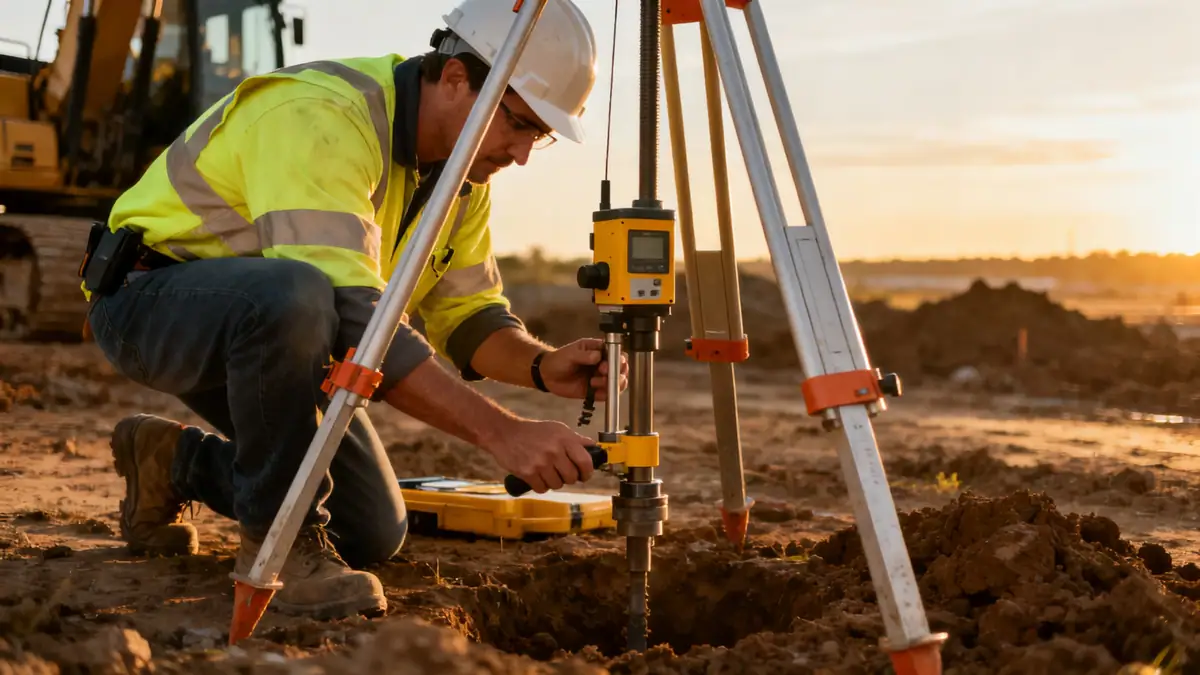
Methodology
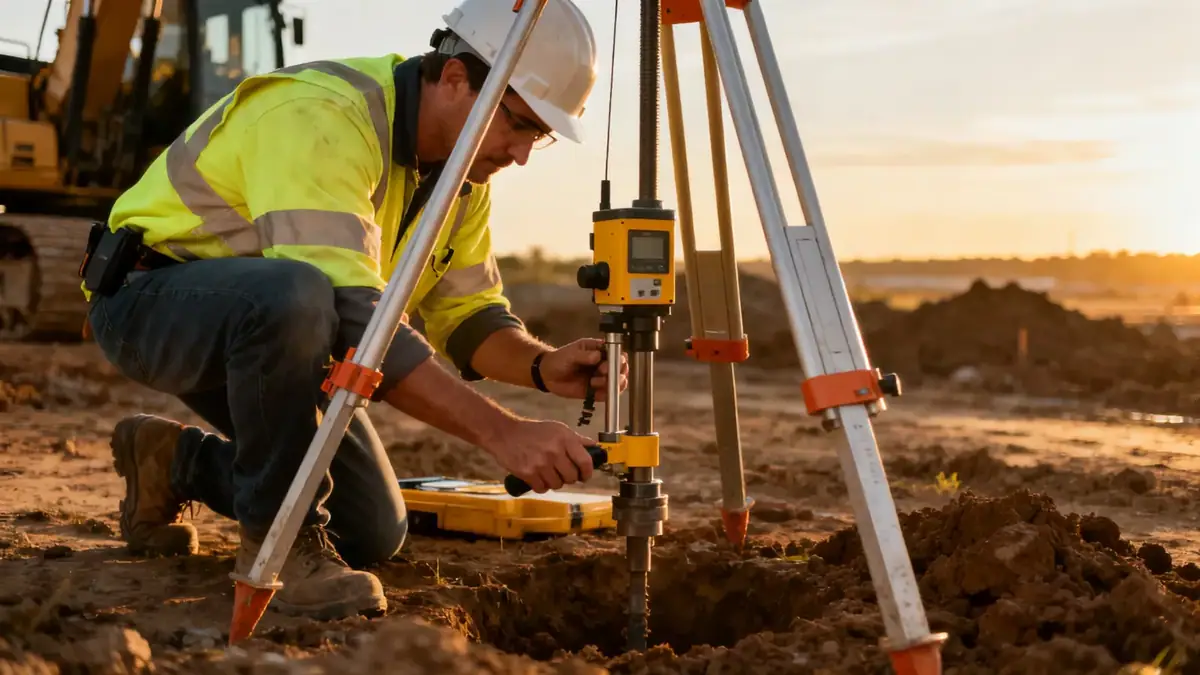
Our methodology for standard penetration testing in Barrie follows ASTM D1586, with split-spoon sampling at 1.5 m intervals to a typical depth of 15 m for residential structures and up to 30 m for industrial projects. We utilize safety hammers and calibrated automatic trip systems to ensure consistent energy transfer. Field procedures include recording blow counts per 150 mm increment, measuring groundwater levels, and classifying soils visually. Data is compiled into detailed logs with N60 corrections for hammer efficiency, rod length, and borehole diameter. For complementary continuous profiling, we also offer cone penetration test (cpt) services in Barrie, which provide high-resolution stratigraphic data.
Reference Technical Parameters
| Parameter | Reference Value |
|---|---|
| Predominant Soil Type | Glacial till, lacustrine clay, and sand/gravel deposits |
| Maximum Seismic Acceleration (PGA) | 0.15g to 0.30g (NBCC 2020, Site Class C/D) |
| Typical Groundwater Level | 1.5 m to 4.0 m below grade (near bay and low-lying areas) |
| Bedrock Depth | 10 m to 30 m (Shallow Georgian Bay Formation limestone) |
| Typical N60 Range | 4 to 12 (clay), 15 to 40 (till), 30 to 60 (sand/gravel) |
Local Considerations — Barrie
Barrie's geology is shaped by glacial Lake Algonquin and the underlying Paleozoic limestone. Downtown sites near the lakefront exhibit soft to firm clays with high plasticity, requiring careful consideration of settlement and slope stability. Northern and eastern areas (e.g., Letitia Heights) feature dense till over shallow bedrock, ideal for shallow foundations but challenging for excavations. Seasonal groundwater fluctuations of up to 1.5 m influence construction dewatering. Our team integrates local data with standard penetration test (spt) results to guide foundation selection. For regional context, we collaborate with our standard penetration test en Toronto hub to ensure consistency across Ontario projects.
Request a Quote
Our team reviews your project and issues an initial report at no cost.
Or write us directly at [email protected]
Services in Barrie
Applicable Standards
- ASTM D1586
- Ontario Building Code (OBC) 2012, Part 4
- NBCC 2020 Seismic Provisions
- CSA A23.3 Concrete Design
- Ontario Regulation 332/12 (Soil Removal)
Frequently Asked Questions
What soil types are commonly encountered in Barrie?
Barrie's subsurface typically comprises glacial tills, lacustrine clays, and sand/gravel deposits. Tills are dense and suitable for spread footings, while clays require deeper foundations or ground improvement. Granular soils are found along ancient shorelines.
How is seismic hazard addressed in Barrie geotechnical investigations?
Per NBCC 2020, Barrie falls in a moderate seismic zone with PGA values of 0.15g to 0.30g depending on site class. Our standard penetration testing measures soil stiffness and liquefaction potential, informing site-specific seismic response analysis.
Are geotechnical studies mandatory for residential construction in Barrie?
The Ontario Building Code requires geotechnical investigations for buildings of 3 storeys or more, or where subsurface conditions are variable. For single-family homes, studies are recommended for foundation design and to avoid differential settlement, especially near the lake.